Off-Grid Solar Power System Installation Cost USA Guide
Off-Grid Solar Power System Installation Cost USA: A Comprehensive Guide
Off-grid solar power systems provide complete electrical independence by operating entirely disconnected from municipal power grids. Unlike grid-tied systems—which rely on the local utility grid as a virtual backup buffer—an off-grid installation must generate, regulate, store, and manage 100% of a property’s electrical load on-site. This requirement for total self-sufficiency shifts the engineering focus from simply offsetting monthly power bills to constructing a highly reliable, autonomous microgrid capable of sustaining household loads through severe winter weather and multi-day overcast periods.
Understanding an Off-grid solar power system installation cost USA estimate requires analyzing a wide array of specialized equipment categories, including deep-cycle battery banks, off-grid or hybrid inverters, charge controllers, balance-of-system (BOS) hardware, and automated backup generators. This educational guide breaks down capital outlays across system tiers, itemizes component expenses, examines practical application scenarios, outlines critical safety protocols, and provides actionable long-term asset management strategies for off-grid properties across the United States.
Overview of Off-Grid Solar Power System Installation Cost USA
Evaluating an Off-grid solar power system installation cost USA framework involves recognizing that off-grid systems cost substantially more than standard grid-tied solar arrays of equivalent nameplate capacity. Nationwide, an off-grid solar system for a standard residential property typically ranges from $30,000 to $70,000+ in gross turnkey capital outlay, with national averages hovering between $45,000 and $65,000 depending on energy storage capacity, site accessibility, and peak electrical load demands. Small-scale DC applications (such as hunting cabins or RVs) can be installed for $6,000 to $12,000, whereas large off-grid estates or working homesteads can exceed $80,000.
Turnkey Off-Grid Cost Distribution (Average $50,000 Full-Home AC System)
├── Solar PV Module Array (20% – 25%): $10,000 – $12,500
├── Lithium Battery Energy Storage (30% – 40%): $15,000 – $20,000
├── Off-Grid Inverter / Charger & Controllers (12% – 18%): $6,000 – $9,000
├── Auto-Start Backup Generator (10% – 15%): $5,000 – $7,500
└── Civil Works, Racking, Trenching & Labor (12% – 18%): $6,000 – $9,000
The higher cost of off-grid solar stems from the energy storage and power management infrastructure required to sustain power when the sun is not shining. In a grid-tied setup, the utility grid handles peak surge demands (such as starting a well pump or central air conditioner) and supplies night-time power. In an off-grid setup, the solar array must be oversized to charge large battery banks during limited winter peak sun hours, while the inverter must be sized to handle maximum simultaneous starting surges.
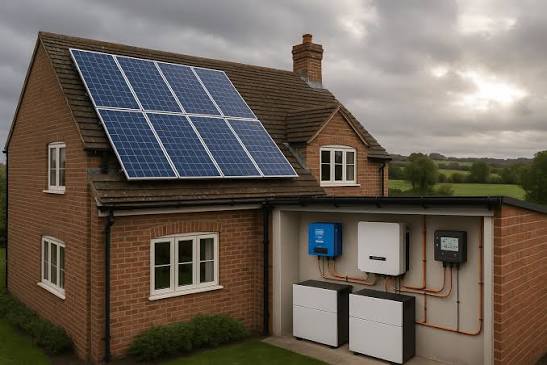
Furthermore, off-grid systems require a secondary backup power source—typically a stationary, liquid-cooled, auto-start propane or diesel generator—to prevent deep battery discharges during extended multi-day storms. The combination of photovoltaic panels, large lithium battery banks, heavy-duty off-grid inverters, charge controllers, and backup generators drives total system costs to two to three times that of a basic grid-tied array.
Primary System Configurations and Component Tiers
Selecting an off-grid system configuration involves matching daily kilowatt-hour (kWh) consumption, peak surge wattage, and desired days of battery autonomy against physical equipment tiers.
| Category / Type | System Description | Common Use Case | Estimated Turnkey Cost Range |
| Direct DC System | Panels connected directly to DC loads via charge controllers; no AC inverter or large battery bank. | Agricultural stock pumps, remote telecommunications, or basic hunting sheds. | $6,000 – $12,000 / Minimal complexity / Low capacity. |
| Cabin / Tiny Home (Mixed DC/AC) | 2kW–5kW PV array paired with a 5kWh–15kWh battery and small 3kW–5kW inverter. | Part-time seasonal cabins, tiny homes, or recreational retreats. | $12,000 – $28,000 / Moderate installation effort. |
| Standard Full-Home AC System | 6kW–10kW PV array, 20kWh–40kWh lithium battery storage, 8kW–12kW split-phase inverter, and generator. | Full-time year-round single-family homes with standard energy-efficient appliances. | $35,000 – $65,000 / High engineering and electrical trade effort. |
| Large Estate / Agricultural Homestead | 12kW–20kW+ PV array, 45kWh–80kWh+ battery bank, stacked multi-inverters, and high-output generator. | Large rural residences, multi-structure farms, or homes with deep well pumps and workshop machinery. | $65,000 – $110,000+ / Specialist civil and electrical trade effort. |
Choosing Between Configurations
Determining the appropriate off-grid configuration requires an accurate load audit rather than estimations based on square footage. Small seasonal cabins operating efficient DC lighting and a propane refrigerator can perform reliably on a mixed DC/AC setup under $25,000. However, primary year-round residences operating standard household conveniences—such as washing machines, microwave ovens, water pressure pumps, and electronics—require a split-phase 120V/240V AC system with a minimum of 20kWh to 30kWh of lithium battery storage and an integrated backup generator to ensure continuous operational availability.
Practical Scenarios and Field Applications
Scenario 1: Seasonal Off-Grid Cabin in the Pacific Northwest (4kW Array / 15kWh Battery)
A remote 1,200-square-foot cabin situated on wooded terrain uses an off-grid system for weekend use from spring through autumn.
-
Key System Components & Configuration:
-
PV Array: Ground-mounted 4kW array (10x 400W monocrystalline panels) placed in a cleared meadow 100 feet from the cabin.
-
Storage: 15.3kWh Lithium Iron Phosphate ($\text{LiFePO}_4$) battery wall module.
-
Power Conversion: 6kW 120V/240V split-phase off-grid inverter/charger with integrated MPPT charge controller.
-
Backup Generation: 5.5kW dual-fuel (propane/gasoline) portable generator tied into the inverter’s AC-input terminals.
-
-
Financial Profile & Application Relevance: Total installed cost averages $22,000 to $28,000. Limited winter occupancy eliminates the need to size the battery bank for worst-case December solar irradiance, keeping equipment capital requirements manageable.
Scenario 2: Primary Year-Round Single-Family Home in the Southwest (8kW Array / 30kWh Battery)
A 2,200-square-foot primary residence in rural Arizona operates completely off-grid, utilizing energy-efficient building envelopes and high-efficiency heat pump cooling.
-
Key System Components & Configuration:
-
PV Array: Roof-mounted 8kW array (20x 400W high-efficiency panels) utilizing heavy-duty racking.
-
Storage: 30.6kWh rack-mounted $\text{LiFePO}_4$ battery system installed inside a climate-controlled utility room.
-
Power Conversion: 12kW hybrid off-grid inverter system featuring dual MPPT inputs and automated generator start (AGS) logic.
-
Backup Generation: 10kW stationary liquid-cooled propane standby generator wired into a 200-amp transfer switch.
-
-
Financial Profile & Application Relevance: Total installed cost averages $48,000 to $58,000. High daily solar irradiance in the Southwest allows rapid winter battery recharging, while 30kWh of energy storage provides 2.5 days of autonomy during infrequent desert rainstorms.
Scenario 3: High-Demand Mountain Homestead in the Rocky Mountains (14kW Array / 60kWh Battery)
A rural homestead in Colorado experiences heavy winter snowfall, sub-zero temperatures, and operates a 3hp deep-well water pump alongside shop tools.
-
Key System Components & Configuration:
-
PV Array: Ground-mounted 14kW dual-array (35x 400W panels) equipped with steep 45-degree tilt legs to shed heavy snow rapidly.
-
Storage: 61.2kWh heavy-duty commercial-grade $\text{LiFePO}_4$ energy storage cabinet with internal thermal heating pads.
-
Power Conversion: Stacked dual 10kW off-grid inverters (20kW total continuous output / 30kW surge).
-
Backup Generation: 18kW diesel standby generator with a 100-gallon sub-base fuel tank.
-
-
Financial Profile & Application Relevance: Total installed cost averages $82,000 to $105,000. Sub-zero winter temperatures, low solar elevation angles, and heavy motor starting surges demand large battery capacity, dual inverters, and an industrial-grade generator.
Comparative Scenario Analysis
Scenario 1 leverages seasonal usage to minimize battery bank sizing and inverter capacity. Scenario 2 represents a standard, balanced year-round residential design where favorable climate metrics keep total system sizing moderate. Scenario 3 illustrates how high starting surge loads (deep well pumps), severe winter climate conditions, and high continuous power requirements scale battery and inverter costs rapidly.
Planning, Cost, and Resource Considerations
Planning an off-grid solar installation requires a meticulous line-item breakdown of component hardware, trenching, civil foundations, and specialist electrical trade labor.
| Cost Category | Estimated Expenditure Range | Line-Item Explanation & Expense Drivers | Optimization & Cost-Control Tips |
| PV Modules (Panels) | $3,200 – $8,000 ($0.35 – $0.55/W) | Tier-1 monocrystalline panels (380W–450W ratings). | Standardize on 400W commercial-scale modules to optimize rack space and cabling. |
| Battery Storage ($\text{LiFePO}_4$) | $10,000 – $28,000 ($350 – $600/kWh) | Deep-cycle Lithium Iron Phosphate batteries. Main cost driver. | Size storage for 1.5–2 days of autonomy rather than 4–5 days; rely on a generator for rare storms. |
| Inverters & Charge Controllers | $5,000 – $11,000 | Pure sine-wave split-phase off-grid inverters with MPPT controllers. | Select integrated hybrid inverters that combine MPPT controllers, charger, and transfer switch into one chassis. |
| Backup Generator & Transfer | $4,500 – $12,000 | Auto-start propane/diesel stationary generator with automatic transfer switch. | Match generator capacity to battery charger requirements rather than full home peak surge. |
| Balance of System (BOS) | $3,000 – $7,000 | Racking, heavy 4/0 battery cables, rapid shutdown, DC disconnects, & breakers. | Position battery enclosure within 10 feet of inverters to minimize costly heavy-gauge copper runs. |
| Civil Works & Trenching | $2,000 – $6,500 | Excavation for ground-mount piers, concrete footings, and underground conduit. | Use helical ground screws instead of poured concrete piers where soil permits. |
| Specialist Electrical Labor | $5,000 – $12,000 | Off-grid system design, panel wiring, generator integration, & commissioning. | Hire electricians experienced specifically in off-grid microgrids to avoid wiring errors. |
| Estimated Gross Outlay | $32,700 – $84,500+ | Turnkey baseline range prior to applicable state or local incentives. | Perform a strict load-audit to reduce daily kWh demand before purchasing equipment. |
Note: The financial figures presented above serve as baseline national illustrative ranges across the United States. Actual line-item expenses fluctuate based on local labor rates, shipping fees to remote sites, soil excavation difficulty, and local building authority requirements.
Strategies, Tools, and Support Options
Designing an autonomous off-grid power network requires leveraging specific power management strategies, system topologies, and diagnostic tools.
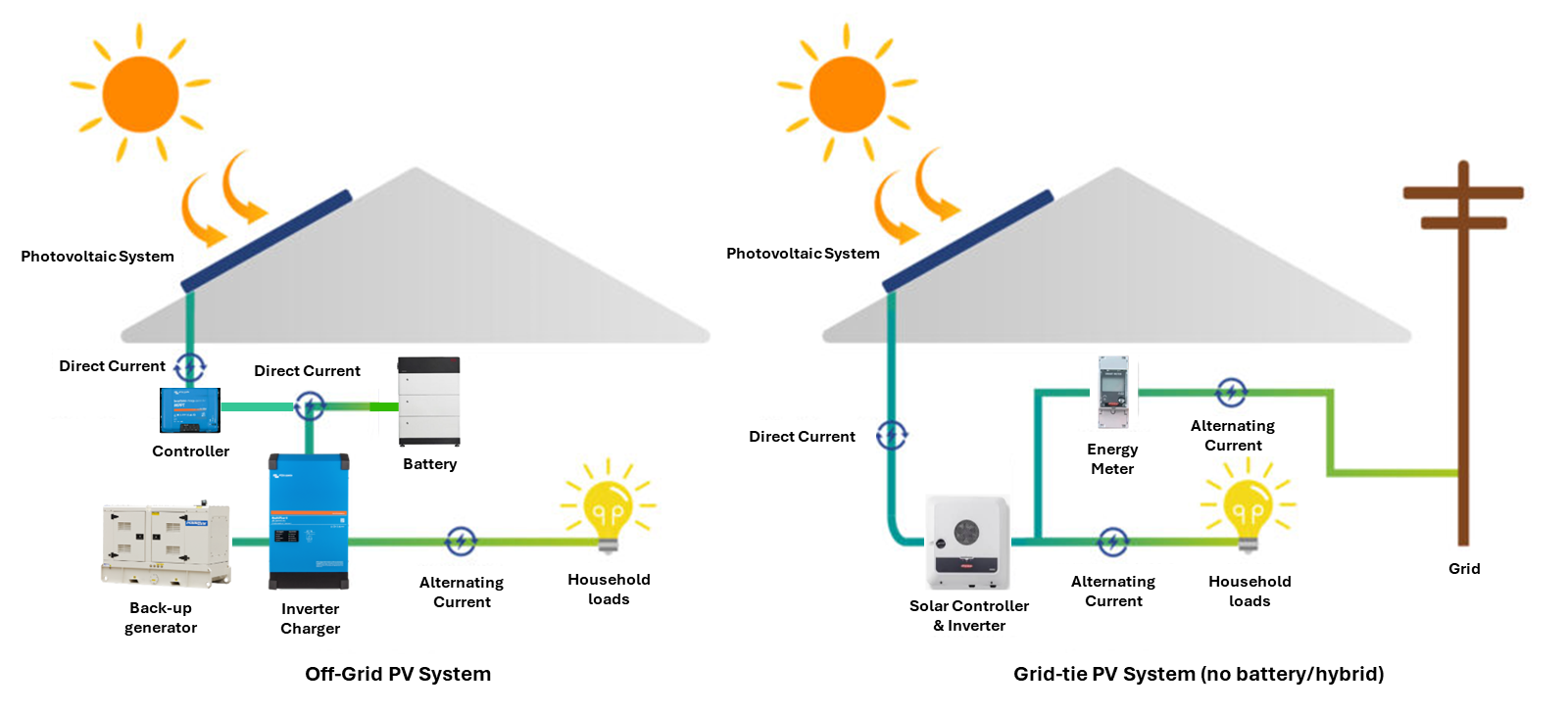
Off-Grid System Power Architecture Flow
├── PV Array (DC Generation) ──> MPPT Charge Controller ──> Battery Bank (48V DC Storage)
├── Backup Generator (AC Input) ──> Inverter/Charger (AC to DC) ──> Recharges Battery Bank
└── Battery Bank (48V DC) ──> Off-Grid Inverter (DC to AC) ──> Main AC Service Panel (120V/240V Loads)
-
AC Coupling vs. DC Coupling Topologies:
-
DC Coupling: Solar panels feed MPPT charge controllers that charge the 48V DC battery bank directly. Highly efficient for battery charging during sunny days, simpler off-grid architecture.
-
AC Coupling: Solar panels connect to grid-interactive string inverters that feed an AC bus directly. Ideal for daytime-heavy loads, but requires frequency-shifting communication from the main off-grid battery inverter to prevent battery overcharging.
-
-
Automated Generator Start (AGS) Logic: An electronic control interface that monitors battery state-of-charge (SoC) and voltage. When the battery bank drops below a programmed threshold (e.g., 20% SoC or 47.5V DC), the AGS automatically signals the standby generator to start, run an absorption charge cycle, and shut down without human intervention.
-
Lithium Iron Phosphate ($\text{LiFePO}_4$) Battery Chemistry: Modern off-grid installations rely almost exclusively on $\text{LiFePO}_4$ chemistry over legacy lead-acid batteries. $\text{LiFePO}_4$ offers 4,000 to 6,000 operational cycles at 80% Depth of Discharge (DoD), exhibits near 95% round-trip efficiency, and eliminates toxic off-gassing and water-topping maintenance.
-
System Energy Monitoring & Remote Telemetry: Advanced off-grid inverters use local data logging or satellite/cellular internet gateways to stream real-time operational metrics—including PV production, battery SoC, load draw, and generator hours—allowing remote diagnostic troubleshooting.
Safety, Risks, and Common Challenges
Off-grid solar installations handle high-voltage direct current (up to 500V DC) alongside massive short-circuit current capacities from lithium battery banks. Managing operational risks requires recognizing several common engineering failure modes.
-
Under-Sizing Inverter Surge Capacity: Electric motors (such as deep well pumps, air compressors, and refrigeration units) require three to five times their continuous running wattage for 1 to 3 seconds during startup. Under-sizing the inverter’s surge rating causes immediate voltage sags, tripping the inverter and cutting household power.
-
Lithium Battery Temperature Degradation: $\text{LiFePO}_4$ batteries cannot accept charge currents when ambient cell temperatures drop below $32^\circ\text{F}$ ($0^\circ\text{C}$). Attempting to charge frozen lithium cells causes permanent lithium plating and battery destruction. Mitigation: Install battery banks inside climate-controlled utility rooms or select battery enclosures equipped with internal 48V thermal heating wraps.
-
Improper DC Grounding and Overcurrent Protection: High-capacity lithium batteries can deliver thousands of amperes during a dead short. Omitting Class T fuses or high-AIC magnetic-hydraulic circuit breakers near the battery terminals creates extreme fire hazards.
-
Generator Frequency Instability: Inexpensive portable generators produce “dirty” AC power with wide voltage and frequency fluctuations. Modern off-grid inverter/chargers will reject unstable generator power, refusing to charge the battery bank. Mitigation: Install clean-power inverter generators or stationary standby units with total harmonic distortion (THD) under 5%.
-
Ignoring the National Electrical Code (NEC) Rapid Shutdown Rules: Installing rooftop PV arrays without module-level rapid shutdown devices violates NEC Section 690.12, creating severe electrocution risks for emergency first responders.
Maintenance, Best Practices, and Long-Term Management
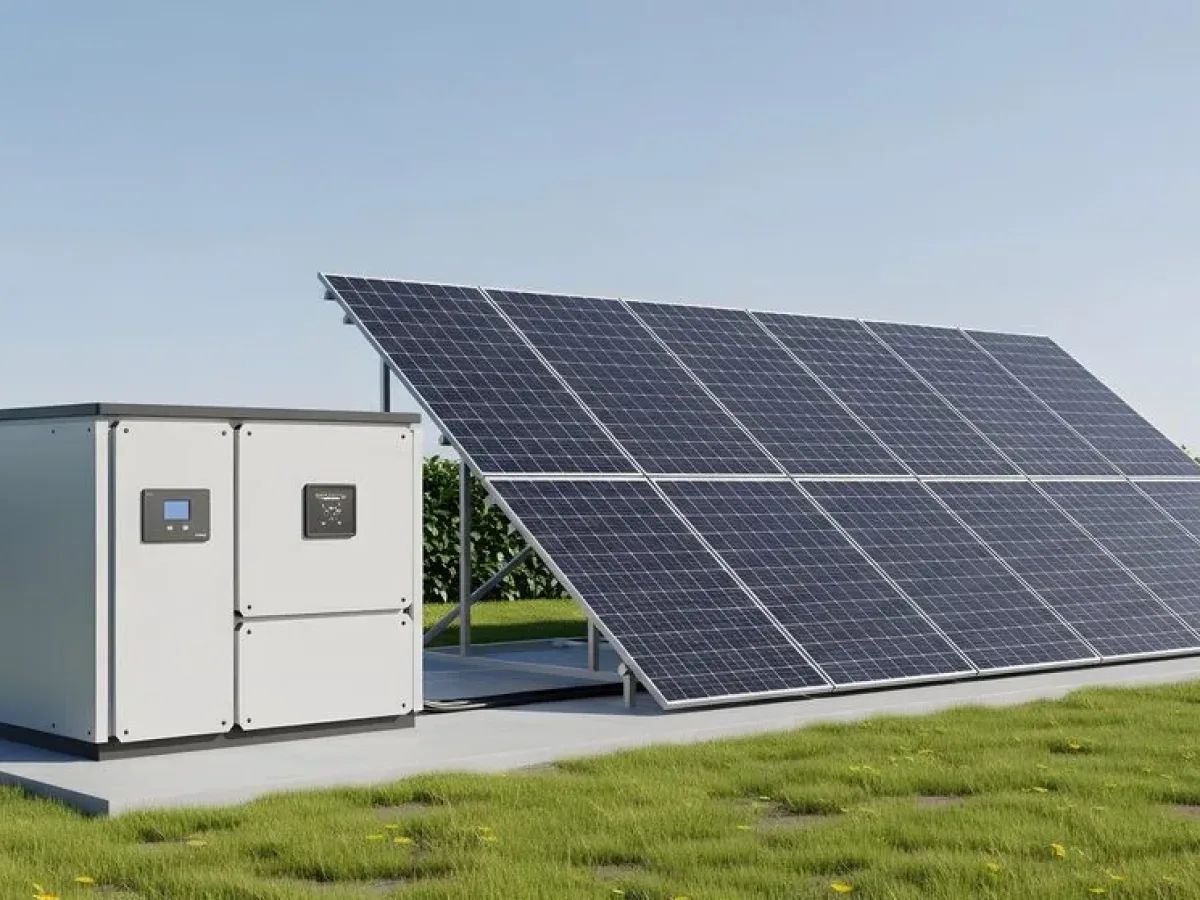
Because off-grid systems serve as a property’s sole utility provider, disciplined preventative maintenance is essential to ensure multi-decade reliability.
Preventative Maintenance Checklist
-
Monthly Operational Tasks:
-
Inspect the off-grid inverter monitoring app for active warning codes or battery cell voltage imbalances.
-
Check standby generator oil levels, coolant levels, and verify automatic exercise cycle operation.
-
Clean intake air filters on utility room power electronics to prevent dust buildup and thermal throttling.
-
-
Quarterly & Seasonal Tasks:
-
Visually inspect solar arrays for dirt accumulation, bird nesting, or foliage shading; clean modules using soft squeegees and deionized water if necessary.
-
Check mechanical torque on all heavy 4/0 DC battery cable connections using an insulated torque wrench to prevent loose, high-resistance hot spots.
-
Verify battery enclosure thermal heating pads operate correctly before winter sub-zero temperatures arrive.
-
-
Annual System Audits:
-
Perform a full standby generator service, including oil filter, air filter, and spark plug replacement.
-
Inspect all roof flashings, ground-mount racking bolts, and external conduit bodies for weather degradation.
-
Conduct a thermal camera inspection across DC disconnects, fuses, and breaker panels under heavy electrical load to detect abnormal thermal signatures.
-
Documentation, System Mapping, and Performance Reporting
Organizing off-grid technical documentation protects capital investments, simplifies maintenance, and verifies property infrastructure quality during real estate transactions.
Essential System Records
-
As-Built Single-Line Schematics: Complete electrical diagrams detailing string configurations, wire gauge sizes, fuse/breaker ratings, grounding electrode locations, and conduit paths.
-
Equipment Serial Number & Warranty Log: Recorded records of all PV modules, battery serial numbers, inverter firmware versions, and generator installation dates.
-
System Programming Configuration File: Saved digital backups of custom inverter parameters—including battery absorption/float voltages, low-voltage disconnect (LVD) thresholds, and AGS start logic.
Illustrative Documentation Examples
-
Example A (Troubleshooting & Warranty Verification): An off-grid homeowner experiences an unannounced inverter shutdown during a winter storm. By referencing the saved as-built single-line schematic and digital monitoring logs, the technician quickly identifies a blown Class T fuse on DC Input Channel 2, replacing the component safely without rewiring the system.
-
Example B (Property Valuation & Sale): During a rural property sale, the buyer’s home inspector evaluates the off-grid power infrastructure. The seller presents a binder containing municipal building permits, AHJ inspection sign-offs, generator service logs, and battery health reports. The documentation confirms professional microgrid construction, supporting the property’s overall appraisal value.
Summary
Evaluating an Off-grid solar power system installation cost USA project demonstrates that while complete electrical independence requires significant capital outlays—ranging from $35,000 to $65,000+ for standard year-round residences—off-grid microgrids offer total immunity from utility power outages, monthly electricity bill inflation, and expensive utility line-extension fees. By establishing precise load audits, selecting high-cycle $\text{LiFePO}_4$ battery storage, integrating automated standby generators, and executing disciplined preventative maintenance, property owners across the United States can establish reliable, zero-carbon residential power networks built to operate autonomously for decades.
Frequently Asked Questions
What is the average cost to install an off-grid solar power system in the USA?
In the United States, an off-grid solar power system for a primary residential home typically costs between $35,000 and $65,000 in gross turnkey capital outlay, with national averages sitting around $45,000 to $50,000. Smaller cabin or tiny-home setups can range from $12,000 to $28,000, while large rural homesteads can exceed $80,000.
Why are off-grid solar systems more expensive than grid-tied solar arrays?
Off-grid solar systems require generating 100% of a home’s power on-site without relying on the utility grid. This requires larger, oversized solar panel arrays, substantial lithium battery storage banks, specialized off-grid inverters capable of handling peak motor surge loads, and an auto-start backup generator for extended overcast winter weather.
How long do lithium batteries last in an off-grid solar system?
Modern Lithium Iron Phosphate ($\text{LiFePO}_4$) batteries typically last between 10 and 15 years (or 4,000 to 6,000 charge-discharge cycles) when operated within recommended temperature and depth-of-discharge parameters. This offers significantly longer operational lifespans compared to legacy lead-acid batteries, which typically last 3 to 5 years.