6.6kW Solar Panel System Cost per Watt New Zealand Guide
6.6kW Solar Panel System Cost per Watt New Zealand: A Comprehensive Planning Guide
Photovoltaic energy has become an increasingly popular capital investment for residential properties across New Zealand. Operating a residential solar system allows households to generate clean electricity on-site, hedge against rising retail energy tariffs, and lower carbon footprints. A 6.6-kilowatt (6.6kW) solar array paired with a 5kW or 6kW inverter represents one of the most widely deployed system capacities for medium-to-large Kiwi homes, providing a balance between available roof area, daily household power consumption, and long-term financial yield.
Evaluating a 6.6kW solar panel system installation cost New Zealand proposal requires understanding how hardware selection, roof complexity, inverter architecture, and trade labor shape unit economics. Normalizing equipment and installation expenses into a per-watt metric enables property owners to compare quotes objectively across different regional markets from Northland to Southland. This educational guide breaks down the capital outlay metrics, system configurations, practical applications, budgeting models, technical risks, and ongoing asset management protocols for 6.6kW solar installations in New Zealand.
Overview of 6.6kW Solar Panel System Cost per Watt New Zealand

Evaluating a 6.6kW solar panel system cost per watt New Zealand baseline involves dividing the turnkey installed price (inclusive of GST) by the array’s total nameplate Direct Current (DC) capacity in watts. For a 6.6kW system (6,600 watts), a standard installation typically utilizes 15 to 16 monocrystalline photovoltaic panels rated between 415 watts and 440 watts each. In the New Zealand residential market, the average installed price for a quality grid-tied 6.6kW system generally ranges from $1.60 to $2.20 NZD per watt for standard string inverter configurations, and from $2.10 to $2.65 NZD per watt for premium microinverter or battery-ready hybrid systems.
Average 6.6kW (6,600W) System Cost Metrics in New Zealand (NZD inc. GST)
├── Unit Cost Range (Standard String Inverter): $1.60 – $2.20 / Watt
├── Unit Cost Range (Microinverter / Premium Tier): $2.10 – $2.65 / Watt
├── Gross Turnkey Cost (Standard 6.6kW Grid-Tied): $10,500 – $14,500 NZD
└── Gross Turnkey Cost (6.6kW + 10kWh Battery Storage): $20,000 – $26,000 NZD
In New Zealand, residential solar installations do not receive direct nationwide point-of-sale cash rebates from the central government, unlike incentive frameworks in some other countries. Consequently, the 6.6kW solar panel system cost per watt New Zealand homeowners encounter reflects the true unsubsidized market cost of Tier-1 equipment, balance-of-system (BOS) components, freight, seismic-compliant mounting hardware, and registered electrical trade labor. However, many major New Zealand retail banks offer low-interest or 0% interest green home loans (typically up to $50,000 over 3 to 5 years), which allows property owners to fund capital outlays with minimal upfront cash impact.
System production metrics vary by geographic latitude and microclimate. A 6.6kW solar array in New Zealand generates an average of 20 to 27 kilowatt-hours (kWh) of electricity per day, or approximately 7,500 to 9,500 kWh annually. Because grid electricity purchase rates average 28c to 35c per kWh while electricity retailer buy-back rates (feed-in tariffs) range from 8c to 13c per kWh, maximizing self-consumption during daytime hours delivers the fastest financial payback.
Key System Categories and Hardware Configurations
Selecting a 6.6kW solar installation involves choosing an inverter topology and equipment tier that matches roof structure, shading conditions, and energy consumption patterns.
| Category / Type | Description | Common Use Case | Time / Cost / Effort Level |
| Grid-Tied String System | 15–16 panels connected in series to a single central string inverter (e.g., 5kW–6kW AC rating). | Unshaded, single-plane roofs; budget-conscious residential projects. | Lowest Cost ($10,500–$13,500 NZD) / 1-day install / Low ongoing effort. |
| Optimized String Array | Panels fitted with DC power optimizers paired with a central string inverter for panel-level tracking. | Roofs with partial shading from trees, chimneys, or multi-directional pitches. | Moderate Cost ($12,500–$15,500 NZD) / 1–2 days install / Moderate monitoring. |
| Microinverter System | Individual microinverters mounted beneath each module, converting DC to AC on the roof. | Complex multi-pitch roofs, heavy local shading, or strict panel-level safety needs. | Higher Cost ($14,000–$17,500 NZD) / 1–2 days install / High digital monitoring. |
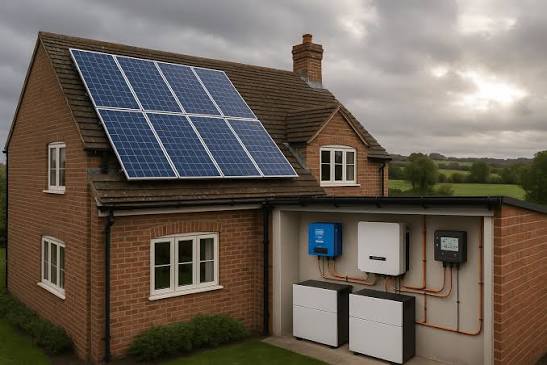
| Hybrid (Battery-Ready) | 6.6kW array connected to a hybrid inverter capable of plugging directly into high-voltage batteries. | Households planning to add battery storage within 1 to 3 years. | Moderate-High Cost ($12,000–$15,000 NZD) / 1-day install / Moderate configuration. |
| Hybrid + Battery Storage | 6.6kW array paired with a hybrid inverter and a 10kWh–14kWh lithium battery storage bank. | Properties seeking evening energy offset, backup power during outages, or grid independence. | High Cost ($20,000–$26,000 NZD) / 2-day install / High active management. |
Choosing Between Hardware Options
Deciding among hardware categories depends primarily on roof geometry and daytime occupancy. If a property features an unshaded, north-facing roof pitch between 15 and 30 degrees, a standard grid-tied string inverter setup achieves the lowest unit cost per watt and the shortest payback period. If the roof features east-west orientations, suffers from tree shading, or requires high panel-level visibility, deploying DC optimizers or microinverters prevents localized shade from reducing output across the entire array.
Practical Application Scenarios
Scenario 1: Suburban Single-Phase Retrofit in Auckland (Unshaded North Pitch)
A family of four in a single-story brick-and-tile home in West Auckland installs a 6.6kW system to offset high daytime air conditioning, refrigeration, and pool pump power draw.
-
Implementation Steps & Components:
-
Installing 15 x 440W Tier-1 monocrystalline panels on an unshaded 20-degree north-facing iron roof.
-
Mounting a 5kW single-phase string inverter with integrated DC isolators inside a shaded carport.
-
Fitting an import/export smart meter inside the main switchboard.
-
Registering the network connection agreement with Vector and setting up an 12c/kWh buy-back agreement with an energy retailer.
-
-
Relevance & Production: Auckland receives an average of 4.2 peak sun hours daily. The 6.6kW array generates approximately 8,200 kWh annually. Because the home utilizes daytime power for water heating and cooling, self-consumption reaches 65%. Total turnkey cost: $11,500 NZD ($1.74 / Watt).
Scenario 2: Multi-Pitch Shaded Roof in Wellington (Microinverter Topology)
A double-story hillside home in Wellington experiences morning shade from neighboring structures and features a split east-west iron roof.
-
Implementation Steps & Components:
-
Installing 16 x 415W panels split evenly (8 east, 8 west) using seismic-anchored aluminum mounting rails.
-
Attaching 16 microinverters beneath panels to convert DC to 230V AC directly on the roof.
-
Installing a wall-mounted gateway unit inside the utility room for panel-level cloud performance tracking.
-
Obtaining network connection approval through Wellington Electricity.
-
-
Relevance & Production: High coastal wind loads and multi-angle roof planes demand robust mounting hardware and microinverter optimization. Panel-level conversion allows east panels to operate independently from shaded west panels in the morning. Total turnkey cost: $15,200 NZD ($2.28 / Watt).
Scenario 3: All-Electric Lifestyle Property in Canterbury (Hybrid + Battery Storage)
A rural property owner near Christchurch uses electric heat pumps, a deep-well water pump, and charges an electric vehicle, drawing heavy evening energy.
-
Implementation Steps & Components:
-
Installing 16 x 415W panels on a shed roof angled at 30 degrees toward the north.
-
Wiring panels to a 6kW hybrid inverter paired with a 10kWh Lithium Iron Phosphate ($\text{LiFePO}_4$) wall-mounted battery.
-
Programming automated charge management to store excess midday solar generation and discharge during peak evening tariff rates (5:00 PM to 9:00 PM).
-
Obtaining inspector sign-off and network approval through Orion New Zealand.
-
-
Relevance & Production: Canterbury experiences high summer solar radiation alongside cold winter evening heating demands. Storing excess daytime generation cuts peak grid consumption, while providing emergency backup power during rural storm outages. Total turnkey cost: $22,500 NZD ($3.40 / Watt equivalent).
Comparative Scenario Analysis
Scenario 1 achieves optimal financial returns by combining straightforward roof geometry with high daytime self-consumption to deliver a short 5-to-6-year payback period. Scenario 2 trades higher upfront hardware costs for microinverters to solve physical shading obstacles and split orientations, ensuring stable output despite Wellington’s weather patterns. Scenario 3 requires a larger initial capital investment for energy storage, but maximizes total self-sufficiency and protects against evening grid price spikes.
Planning, Capital Budgeting, and Cost Breakdown
Planning a 6.6kW solar panel system installation cost New Zealand project requires itemizing hardware supplies, balance-of-system components, compliance testing, and trade labor. The table below outlines a baseline budget model for a standard 6.6kW residential installation in New Zealand.
| Category | Estimated Cost Range (NZD inc. GST) | Line-Item Explanation & Expense Drivers | Optimization Tips |
| Tier-1 Monocrystalline Modules | $3,800 – $5,200 | 15–16 panels (415W–440W ratings); per-watt module cost averages $0.58–$0.80/W. | Select standard black-frame Tier-1 modules with minimum 25-year performance warranties. |
| Inverter Assembly | $2,200 – $3,800 | 5kW–6kW string inverter vs. microinverters or hybrid inverter unit. | Match inverter continuous AC capacity to local lines company connection limits. |
| Seismic Racking & Mounting | $1,200 – $2,200 | Roof hooks, aluminum rails, and fasteners compliant with NZS 4203 seismic standards. | Mounting on trapezoidal iron roofs is cheaper than specialty slate or concrete tile hooks. |
| Electrical BOS & Cabling | $900 – $1,600 | UV-resistant DC cabling, AC/DC isolators, switchboard circuit breakers, & conduits. | Keep inverter mounting locations close to main switchboards to shorten cable runs. |
| Registered Electrician Labor | $1,800 – $2,800 | Site staging, roof mounting, AC/DC wiring, switchboard upgrades, & testing. | Ensure installation trade teams are certified by the Sustainable Energy Association NZ (SEANZ). |
| Inspection & Grid Application | $400 – $800 | Lines company (DNSP) application fees, smart meter reprogramming, & independent inspection. | Confirm if the solar provider includes lines company application fees in their quote. |
| Gross Installed Total | $10,300 – $16,400 NZD | Turnkey price range ($1.56 – $2.48 / Watt) for a complete 6.6kW array. | Obtain 3 itemized quotes from established SEANZ-accredited installers. |
Note: Figures listed above serve as regional baseline market estimates in New Zealand dollars (NZD) including 15% GST. Actual line-item expenses fluctuate based on roof pitch, multi-story access requirements, switchboard upgrades, and regional freight surcharges.
Strategies, Analytical Tools, and Support Frameworks
Evaluating a residential solar proposal in New Zealand involves leveraging analytical tools, green financing channels, and industry standards.
-
SEANZ (Sustainable Energy Association New Zealand) Accreditation: The primary industry body governing solar standards, safety protocols, and installer codes of conduct in New Zealand.
-
Advantages: Verifies that installers hold valid New Zealand electrical practicing licenses and adhere to national wiring regulations (AS/NZS 3000 and AS/NZS 5033).
-
Disadvantages: Accreditation verifies technical competence but does not replace consumer due diligence regarding warranty terms.
-
-
Bank Green Home Loan Financing: Concessional top-up mortgage facilities offered by major New Zealand retail banks (such as ANZ, Westpac, ASB, BNZ, and Kiwibank).
-
Advantages: Offers 0% or low-interest financing (e.g., 1% over 3 years) for up to $50,000 of solar and battery equipment, allowing power savings to fund loan repayments.
-
Disadvantages: Requires holding an active home loan with the lending institution and meeting lending equity criteria.
-
-
Smart Meter Interval Data Analysis: Reviewing 30-minute interval data provided via electricity retailer apps or independent data portals.
-
Advantages: Maps exact daily consumption curves, allowing accurate sizing to prevent over-investing in capacity that gets exported at low buy-back rates.
-
Disadvantages: Requires obtaining historical power files from current electricity suppliers.
-
-
NIWA Solar Radiation Databases: Meteorological irradiance maps managed by the National Institute of Water and Atmospheric Research (NIWA).
-
Advantages: Provides baseline annual kWh generation estimates tailored to specific New Zealand regions (e.g., Marlborough vs. Southland).
-
Disadvantages: Does not automatically factor in micro-shading from local trees or hills.
-
Safety Hazards, System Risks, and Common Pitfalls
Installing rooftop solar equipment involves managing high-voltage Direct Current (up to 600V DC), structural roof loads, and coastal environmental corrosion.
-
Inadequate Marine-Grade Fasteners in Coastal Zones: Installing standard zinc-plated hardware on properties exposed to salt air (within 5 km of the coast) causes rapid pitting corrosion and rust bleeding down roof sheets. Mitigation: Specify 316 marine-grade stainless steel or anodized aluminum fasteners for all coastal installations.
-
Switchboard Non-Compliance and Unexpected Costs: Installing solar on older properties with legacy fuse boards without budgeting for a switchboard upgrade causes compliance delays on installation day. Mitigation: Request a switchboard inspection during the initial site survey to verify RCD safety switch compliance.
-
Improper Roof Penetration Sealing: Prying up iron roof sheets or concrete tiles to attach mounting legs without EPDM rubber flashing boots allows rainwater to seep into internal roof timbers. Mitigation: Ensure installers use specialized, UV-stabilized flashing assemblies rather than relying solely on silicone sealant.
-
DC Arc Faults from Poor Crimp Connections: Sub-standard hand-crimping of MC4 DC cable connectors on the roof can create high-resistance joints, resulting in thermal arc faults. Mitigation: Mandate factory-molded or professional crimp tools compliant with AS/NZS 5033 standards.
-
Relying Exclusively on Low Export Buy-Back Rates: Assuming electricity retailers will maintain high buy-back tariffs indefinitely can distort financial models. Mitigation: Calculate financial returns based on consuming at least 50% to 60% of generated solar energy on-site rather than relying on export credits.
Maintenance, Best Practices, and Long-Term Asset Management

While photovoltaic panels contain no moving parts and require minimal daily maintenance, structured periodic checks protect equipment warranties and maintain peak generation across a 25-year operational lifespan.
Preventative Maintenance Checklist
-
Quarterly Telemetry Verification: Review inverter mobile app production figures monthly to verify daily kWh output matches seasonal weather expectations.
-
Biannual Visual Inspection: Inspect the array from ground level using binoculars or high-resolution cameras to check for cracked glass, bird nesting beneath panels, or loose hanging cabling.
-
Annual Panel Cleaning: In areas subject to road dust, sea salt spray, or agricultural pollen, clean panel glass using demineralized water and a soft non-abrasive pole brush. Avoid high-pressure washers or harsh chemical detergents.
-
Five-Year Professional Electrical Audit: Hire a registered inspector or solar electrician to test insulation resistance, verify DC isolator operation, check mounting torque tightness, and perform thermal imaging on switchboard connections.
-
Vegetation Trimming: Trim surrounding tree canopies every 2 to 3 years to maintain clear solar access paths during winter low-sun angles.
System Documentation, Performance Tracking, and Verification
Maintaining organized technical documentation protects capital investments, simplifies warranty processing, and verifies property improvements during real estate sales.
Essential Project Records
-
Certificate of Compliance (CoC) & Electrical Safety Certificate (ESC): Mandatory legal sign-off documents issued by a registered New Zealand electrician confirming compliance with AS/NZS 3000 wiring standards.
-
Lines Company Approval Letter: Formal connection confirmation issued by the local electricity distribution network operator (e.g., Vector, Orion, Powerco, Unison).
-
Array Mapping and Single-Line Schematics: Complete electrical diagrams detailing panel string configurations, inverter locations, and switchboard tie-in points.
-
Warranty Statements & Serial Number Logs: Written documentation detailing panel product warranties (12 to 25 years), linear power output guarantees (25 to 30 years), inverter warranties (5 to 10 years), and installer workmanship guarantees (5 to 10 years).
Illustrative Performance Tracking Examples
-
Example A (Retailer Buy-Back Optimization): An Auckland homeowner reviews their monthly electricity statement. By tracking interval generation data, they shift heavy appliance runtimes (dishwasher, washing machine, heat pump water heater) to 11:00 AM – 3:00 PM. Self-consumption rises from 35% to 62%, saving an additional $68 per month compared to exporting excess power at the 12c buy-back rate.
-
Example B (Warranty Claim Resolution): A cloud monitoring alert reports zero generation on String 1. The homeowner pulls up the original array layout diagram and serial log, allowing the installer to trace the issue to a failed DC isolator switch and process a warranty replacement within 48 hours.
Analyzing the 6.6kW solar panel system cost per watt New Zealand landscape reveals that residential solar installations range from $1.60 to $2.20 NZD per watt for standard string inverter systems, with gross turnkey costs between $10,500 and $14,500 NZD inclusive of GST. Utilizing low-interest bank green home loans allows property owners to fund capital outlays while energy bill savings offset financing costs. By selecting SEANZ-accredited installers, verifying seismic mounting compliance, aligning system capacity with daily household load profiles, and conducting periodic electrical maintenance, New Zealand homeowners can establish a resilient, zero-carbon energy asset that delivers clean electricity for decades.
Frequently Asked Questions
What is the average cost per watt for a 6.6kW solar system in New Zealand?
In New Zealand, the average installed cost for a standard 6.6kW residential solar system ranges from $1.60 to $2.20 NZD per watt (inclusive of GST) for string inverter setups. Premium configurations utilizing microinverters or battery-ready hybrid inverters generally range from $2.10 to $2.65 NZD per watt.
How much energy does a 6.6kW solar system generate per day in New Zealand?
A 6.6kW solar array in New Zealand generates an average of 20 to 27 kilowatt-hours (kWh) of electricity per day, depending on region, tilt angle, orientation, and seasonal weather conditions. Annual output typically ranges between 7,500 and 9,500 kWh.
Are there government rebates for residential solar panel systems in New Zealand?
New Zealand does not offer direct government cash rebates for residential solar panel installations. However, major retail banks offer concessional green home loan top-ups (including 0% or low-interest loans over 3 to 5 years) to help homeowners finance solar equipment and installation costs.