Single Phase vs Three Phase EV Charger Cost Australia
Electric vehicle (EV) adoption across Australia relies heavily on home and workplace Level 2 alternating current (AC) charging infrastructure. When installing a wall-mounted charging station, property owners must choose between a single-phase (typically 7.4 kW) or a three-phase (up to 22 kW) electrical connection. This structural choice governs available charging speed, necessary switchboard infrastructure, cabling requirements, and total capital expenditure.
Evaluating the Single phase vs three phase EV charger installation cost Australia property owners encounter involves assessing existing grid connections, switchboard capacities, daily driving distance, and vehicle onboard charger limits. Selecting between these options determines whether an installation requires straightforward electrical circuit additions or extensive distribution network upgrades. This educational guide breaks down technical differences, equipment and trade costs, real-world deployment scenarios, risk mitigation strategies, and long-term asset management protocols across Australian residential and commercial environments.
Overview of Single Phase vs Three Phase EV Charger Installation Cost Australia

Evaluating a Single phase vs three phase EV charger installation cost Australia comparison requires understanding how electrical power is delivered to Australian properties. Most single-family homes in suburban Australia operate on a single-phase electricity supply operating at 230V or 240V. A dedicated 32-amp single-phase circuit supplies approximately 7.2 kW to 7.4 kW of continuous AC power. This rate adds approximately 40 to 45 kilometers of driving range per hour of charging, which easily replenishes a standard EV battery overnight.
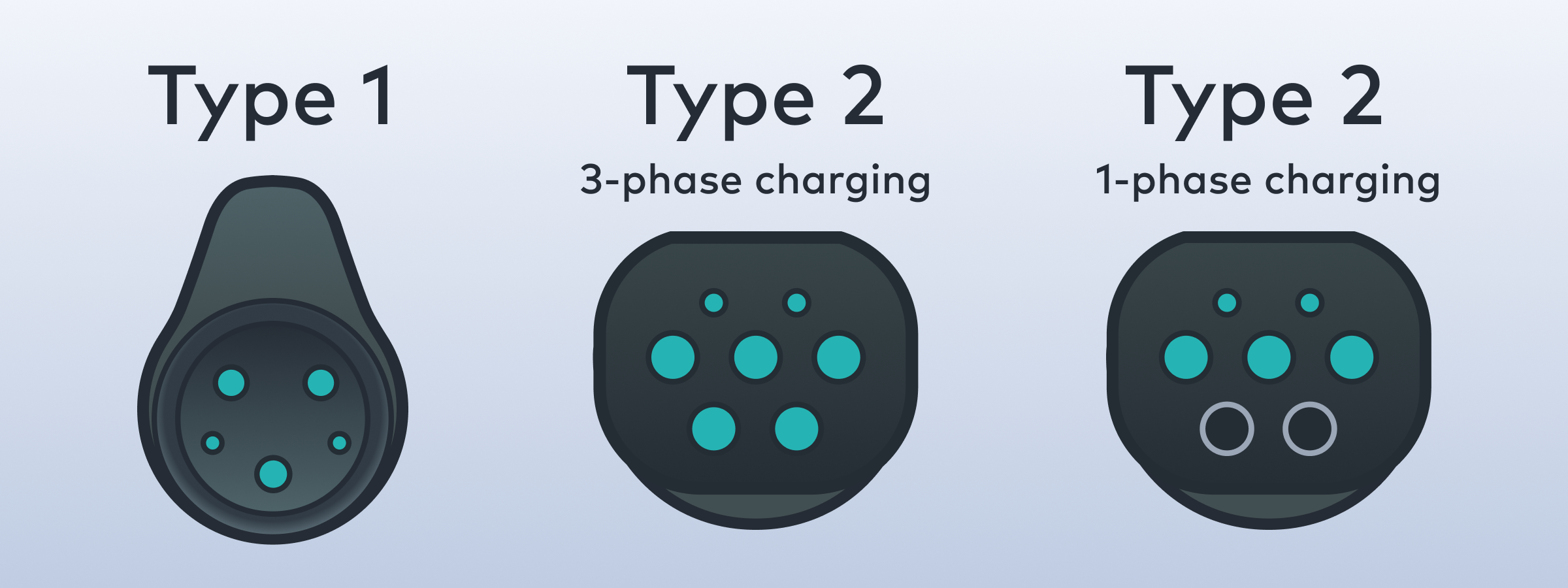
Properties connected to a three-phase electricity supply receive three separate 230V alternating currents displaced in phase, operating across a nominal 400V or 415V line-to-line voltage. A 32-amp three-phase EV charger delivers up to 22 kW of continuous AC power, adding roughly 120 to 140 kilometers of range per hour. However, the maximum AC charge rate is constrained by the vehicle’s onboard AC-to-DC converter; many popular electric vehicles feature onboard converters capped at 11 kW, meaning they draw a maximum of 11 kW even when connected to a 22 kW three-phase charger.
| Cost & Performance Factor | Single-Phase System (7.4 kW) | Three-Phase System (11 kW – 22 kW) |
| Typical Charger Hardware Price | AUD $700 – $1,800 | AUD $800 – $2,500 |
| Standard Trade Labor & Materials | AUD $600 – $1,500 | AUD $800 – $2,000 |
| Grid / Service Supply Upgrade | AUD $0 – $1,500 (If board full) | AUD $2,000 – $6,000+ (If upgrading grid supply) |
| Turnkey Cost (Existing Compatible Supply) | AUD $1,300 – $3,000 | AUD $1,600 – $3,800 |
| Turnkey Cost (Supply Upgrade Required) | AUD $2,500 – $4,500 | AUD $4,500 – $9,000+ |
| Range Added per Hour (Vehicle Dependent) | ~40 km – 45 km | ~75 km (at 11 kW) to ~130 km (at 22 kW) |
The financial divergence between single-phase and three-phase installations centers on existing site infrastructure. If a property already possesses an active three-phase connection—common in newer residential developments, rural properties, or commercial buildings—installing a 22 kW three-phase charger incurs only a modest hardware and wiring premium over a 7.4 kW single-phase unit. However, if a single-phase home requires a distribution network service provider (DNSP) service upgrade to three-phase power, civil works, meter isolation, service fuse changes, and switchboard rebuilds can add AUD $2,000 to $6,000+ to total project outlays.
Key System Configurations and Installation Categories
Selecting an EV charging configuration in Australia involves matching charger hardware, switchboard capacity, and network supply profiles to vehicle requirements.
| Category / Type | Description | Common Use Case | Time / Cost / Effort Level |
| Standard Single-Phase (7.4 kW) | Dedicated 32A single-phase circuit running from main switchboard to wall box. | Standard suburban homes with single-phase power and overnight charging routines. | AUD $1,300 – $2,500 total / 3–5 hours labor / Low-to-moderate effort. |
| Solar-Aware Single-Phase (7.4 kW) | Single-phase charger equipped with current transformers (CTs) for solar matching. | Homes with existing single-phase solar PV arrays looking to charge off solar surplus. | AUD $1,800 – $3,200 total / 4–6 hours labor / Moderate technical configuration. |
| Direct Three-Phase (11 kW – 22 kW) | 32A three-phase circuit wired to an existing three-phase switchboard. | Newer homes, multi-EV households, or commercial sites with pre-existing three-phase supply. | AUD $1,800 – $3,800 total / 4–6 hours labor / Moderate trade effort. |
| Single-Phase with Load Management | 7.4 kW charger paired with dynamic load shedding to prevent switchboard overload. | Older homes with 40A or 63A main single-phase supply and heavy electric appliance loads. | AUD $1,900 – $3,400 total / 4–6 hours labor / Advanced control setup. |
| Three-Phase Supply Upgrade + Charger | Upgrading site grid supply from single-phase to three-phase, including new meter and board. | Older homes needing high-speed 22 kW charging or running heavy commercial equipment. | AUD $4,500 – $9,000+ total / 1–3 days / High civil & utility trade effort. |
Choosing Between Installation Categories
Determining the correct path depends on daily mileage, onboard vehicle charger specifications, and existing switchboard infrastructure. For property owners driving less than 150 kilometers per day, a 7.4 kW single-phase charger supplies more than enough energy overnight. Upgrading a single-phase home to three-phase power solely for EV charging is rarely cost-effective unless the property owner charges multiple vehicles concurrently, operates high-mileage commercial vehicles, or plans wider building electrification (such as large multi-head HVAC systems or induction cooking).
Practical Application Scenarios and Deployment Layouts
Scenario 1: Suburban Single-Family Home in Melbourne (Single-Phase 7.4 kW)
A homeowner in suburban Melbourne drives 50 kilometers daily and seeks a reliable, low-cost home charging solution. The home has a standard 63A single-phase switchboard located inside an attached garage.
-
Implementation Steps & Components:
-
Performing a switchboard load check to verify continuous capacity.
-
Installing a dedicated 40A Type A residual current breaker with overcurrent protection (RCBO) in the main switchboard.
-
Running 6 meters of 6mm² heavy-duty orange circular copper cable inside rigid PVC conduit.
-
Mounting a 7.4 kW single-phase smart wall box (such as a Tesla Wall Connector or Wallbox Pulsar Plus) adjacent to the parking space.
-
Testing earth loop impedance and commissioning app settings.
-
-
Why Relevant: Represents a typical Australian residential deployment. Utilizing existing single-phase switchboard capacity keeps total hardware, cabling, and trade labor costs between AUD $1,400 and $2,200.
Scenario 2: Modern Home in Brisbane with Pre-Existing Three-Phase Power (22 kW Charger)
A homeowner in Brisbane occupies a modern home built with a 32A three-phase switchboard supply and an 8 kW solar array. The household operates two electric vehicles with 11 kW onboard AC chargers.
-
Implementation Steps & Components:
-
Verifying three-phase main switch isolation and balanced phase capacity.
-
Installing a 5-core 6mm² copper cable run from the switchboard to the garage.
-
Fitting a three-phase 32A 4-pole RCBO protection device in the switchboard.
-
Wall-mounting a 22 kW solar-aware three-phase charger (such as a myenergi Zappi Three-Phase).
-
Fitting 3 external CT clamps across the incoming supply phases to enable dynamic solar surplus charging and building load balancing.
-
-
Why Relevant: Demonstrates how pre-existing three-phase infrastructure allows high-speed 11 kW/22 kW deployment at minimal incremental cost. Total installed outlay ranges from AUD $2,200 to $3,500.
Scenario 3: Older Sydney Residence Requiring Service Upgrade to Three-Phase
A homeowner in Sydney owns an older property connected to a 40A single-phase supply. The owner operates an electric commercial van requiring rapid daily turnaround and orders a three-phase supply upgrade from the local DNSP (Ausgrid or Endeavour Energy).
-
Implementation Steps & Components:
-
Submitting a consumer mains upgrade application to the regional DNSP.
-
Civil contractor trenches from the property boundary pit to the main switchboard location.
-
Electrical contractor installs a modern three-phase meter box, 3-phase main switch, neutral link, and surge protection.
-
Utility company pulls new 3-phase overhead or underground consumer mains to the property.
-
Electrician installs a dedicated three-phase 32A circuit to a 22 kW commercial-grade wall charger.
-
-
Why Relevant: Illustrates the complete financial scope of a grid upgrade. Civil works, utility fees, switchboard reconstruction, and hardware bring the total project investment to AUD $5,500 to $9,000+.
Comparative Scenario Analysis
Scenario 1 highlights the economic efficiency of single-phase setups on standard residential properties. Scenario 2 shows that properties with pre-existing three-phase connections can access triple the charging power for a modest hardware markup. Scenario 3 illustrates how civil works and grid service applications significantly expand capital outlay when single-phase properties require three-phase supply upgrades.
Planning, Capital Budgeting, and Resource Allocation
Evaluating the Single phase vs three phase EV charger installation cost Australia equation requires breaking down hardware pricing, electrical trade labor, protection devices, and utility fees. The budget model below outlines line-item estimates for typical Australian installations.
| Expense Line Item | Single-Phase System (AUD) | Three-Phase System (AUD) | Line-Item Explanation & Expense Drivers |
| Wall Charger Hardware | $700 – $1,800 | $800 – $2,500 | Single-phase (7.4 kW) vs three-phase (22 kW); smart app features. |
| Licensed Electrician Labor | $500 – $1,200 | $700 – $1,500 | Wiring labor, conduit bending, mounting, and mandatory safety testing. |
| Cabling & Enclosures | $100 – $300 | $250 – $600 | 3-core 6mm² (single-phase) vs 5-core 6mm² (three-phase) copper cabling. |
| Switchboard Circuit Protection | $100 – $250 | $200 – $450 | Type A 2-pole RCBO (single-phase) vs 4-pole 32A RCBO (three-phase). |
| Switchboard Upgrade (If Full) | $800 – $2,000 | $1,200 – $2,500 | Required if existing fuse box lacks physical space or safety switches. |
| DNSP Supply Upgrade / Civil Works | N/A | $2,000 – $6,000+ | Underground trenching, consumer mains replacement, and DNSP fees. |
| Estimated Turnkey Outlay | $1,300 – $3,000 | $1,600 – $9,000+ | Total turnkey investment depending on existing grid connection. |
Note: Figures listed represent illustrative Australian baseline estimates in AUD including GST. Final project pricing fluctuates based on regional labor rates, cable run distances, structural materials, and specific DNSP connection rules.
Strategies, Tools, and Support Options
Navigating EV charger installations in Australia involves using dynamic load control tools, solar management hardware, and state-level support framework mechanisms.
-
Dynamic Load Balancing Controllers: External current transformers (CTs) installed at the main switchboard that monitor total household power consumption.
-
Advantages: Automatically throttles EV charger output when heavy household appliances cycle on, avoiding switchboard tripping on constrained single-phase connections.
-
Disadvantages: Adds AUD $200 to $450 in specialized hardware and setup costs.
-
-
Solar Matching Integration (Solar-Aware Charging): Smart chargers (such as myenergi Zappi or Evnex) that interface with solar PV systems.
-
Advantages: Diverts excess solar generation directly into the vehicle battery instead of exporting it to the grid at low feed-in tariffs.
-
Disadvantages: Requires CT clamp wiring back to the main inverter or switchboard meter.
-
-
State Government Incentives and EV Electric Vehicle Tariffs: Energy retailers across Australian states (such as Origin, AGL, or Ergon) offer dedicated EV tariffs.
-
Advantages: Access to ultra-low off-peak electricity rates (e.g., overnight window charging at 8c to 12c per kWh), substantially lowering running costs.
-
Disadvantages: Requires a smart meter capable of interval tracking.
-
-
Pre-Installation Switchboard Audits: On-site or digital switchboard inspections conducted by licensed electricians prior to hardware purchase.
-
Advantages: Prevents purchasing an incompatible 22 kW three-phase charger for a single-phase property.
-
Disadvantages: May incur a minor upfront inspection fee if not bundled into the installation contract.
-
Safety, Regulatory Risks, and Technical Challenges
Installing high-current continuous AC equipment requires strict compliance with Australian wiring standards (AS/NZS 3000) and specialized EV rules (AS/NZS 3008 and IEC 61851).
-
Purchasing Incompatible Three-Phase Hardware: Buying a 22 kW three-phase charger for a home connected to a single-phase supply results in the charger operating at a reduced single-phase output (typically capped at 3.7 kW or 7.4 kW) while incurring higher hardware expenses. Prevention: Confirm grid phase supply via switchboard main switches or retailer utility bills before ordering equipment.
-
Ignoring Vehicle Onboard AC Limitations: Installing an expensive 22 kW three-phase system for an EV whose onboard converter is capped at 7.4 kW or 11 kW AC power yields zero improvement in charging speed. Prevention: Check vehicle manufacturer technical specifications for maximum AC charging input limits.
-
Bypassing DC Residual Current Protection Rules: Standard household Type AC RCDs cannot detect DC earth fault leakage currents generated by EV battery power electronics. Prevention: Ensure the charger features built-in 6mA DC residual direct current detection (RDC-DD) or install a Type B or Type A RCBO per AS/NZS 3000 rules.
-
Unpermitted DIY Electrical Installation: Attempting to self-install 240V or 400V electrical circuits violates Australian state laws, voids home building insurance, and poses severe fire or electrocution hazards. Prevention: Engage only licensed electrical contractors who issue a official Certificate of Electrical Safety (CCES / CES).
-
Phase Imbalance on Three-Phase Supplies: Connecting a heavy single-phase 32A load to an unbalanced three-phase switchboard can trip main supply fuses. Prevention: Have the electrician balance household loads evenly across all three incoming phases during installation.
Maintenance, Best Practices, and Long-Term Management
While solid-state Level 2 chargers require minimal daily upkeep, routine maintenance preserves safety, compliance, and charging efficiency over a multi-year service life.
Ongoing Maintenance Checklist
-
Monthly Physical Inspection: Inspect wall box enclosures for cracking, insect ingress, or moisture damage. Check charging cables along their length for outer jacket flattening or pin damage.
-
Biannual RCBO Mechanical Test: Press the “Test” button on the dedicated switchboard circuit breaker to confirm the mechanical trip functions correctly.
-
Cable Strain Management: Avoid leaving heavy 32A charging cables lying across garage floors where vehicles can run over connectors. Utilize wall-mounted holsters or cable wraps.
-
App Firmware Updates: Keep smart charger mobile applications updated to maintain connectivity with solar inverters and energy retailer off-peak schedule algorithms.
-
Five-Year Switchboard Audits: Engage a licensed electrician to perform thermal imaging and terminal torque checks on switchboard breakers during routine home electrical inspections.
System Documentation and Performance Verification
Maintaining organized technical records protects property value, simplifies insurance claims, and verifies safety compliance.
Essential Project Records
-
Certificate of Electrical Safety (CCES / CES): Mandatory legal sign-off issued by a licensed Australian electrician confirming compliance with AS/NZS 3000.
-
Manufacturer Hardware Manual & Warranty Statement: Product documentation detailing IP ratings, warranty coverage (typically 2 to 5 years), and technical specifications.
-
Switchboard Line Diagram & Load Calculation Sheet: Written records confirming switchboard continuous capacity and circuit allocation.
-
DNSP Connection Approval: Formal approval documentation from the local distribution network operator for three-phase service upgrades or high-capacity connections.
Illustrative Documentation Examples
-
Example A (Insurance Verification): Following a single-phase EV charger installation in Melbourne, a homeowner’s insurance provider requests proof of professional installation. The owner provides the electrician’s itemized invoice and the official Certificate of Electrical Safety, confirming compliance with Australian standards.
-
Example B (Property Resale Conveyancing): During a home sale in Brisbane, a prospective buyer’s inspector notes a 22 kW three-phase wall charger. The seller presents the DNSP supply upgrade approval, switchboard single-line diagram, and installer warranty certificate, proving a code-compliant asset that increases property value.
Evaluating the Single phase vs three phase EV charger installation cost Australia equation demonstrates that single-phase 7.4 kW systems (AUD $1,300 – $3,000 installed) supply ideal, cost-effective overnight charging for most Australian households. Three-phase 22 kW systems (AUD $1,600 – $3,800 on existing 3-phase supply; AUD $4,500 – $9,000+ if requiring supply upgrades) provide rapid charging for commercial fleets, multi-EV homes, or high-mileage drivers. By consulting licensed electricians, verifying vehicle onboard charger limits, assessing switchboard capacity, and securing mandatory certificates of electrical safety, Australian property owners can deploy a reliable Level 2 charging asset tailored to their energy needs.
Frequently Asked Questions
How much does it cost to install a single-phase vs three-phase EV charger in Australia?
In Australia, a standard single-phase 7.4 kW EV charger costs between AUD $1,300 and $3,000 fully installed. A three-phase 22 kW charger costs AUD $1,600 to $3,800 if the property already has three-phase power. If a property requires a grid supply upgrade from single-phase to three-phase power, total installed costs range from AUD $4,500 to $9,000+.
Do I need three-phase power to charge an EV at home in Australia?
No. A standard single-phase 7.4 kW charger adds roughly 40 to 45 kilometers of range per hour, which fully recharges most EV batteries overnight. Three-phase power is only necessary if you require rapid daytime charging, operate multiple EVs simultaneously, or drive high daily commercial mileage.
Will a 22 kW three-phase charger charge my electric car three times faster?
Not necessarily. Charging speed is limited by your vehicle’s internal onboard AC converter. Many popular EVs have onboard AC converters capped at 11 kW. If your vehicle is capped at 11 kW, it will draw a maximum of 11 kW even when connected to a 22 kW three-phase charger.