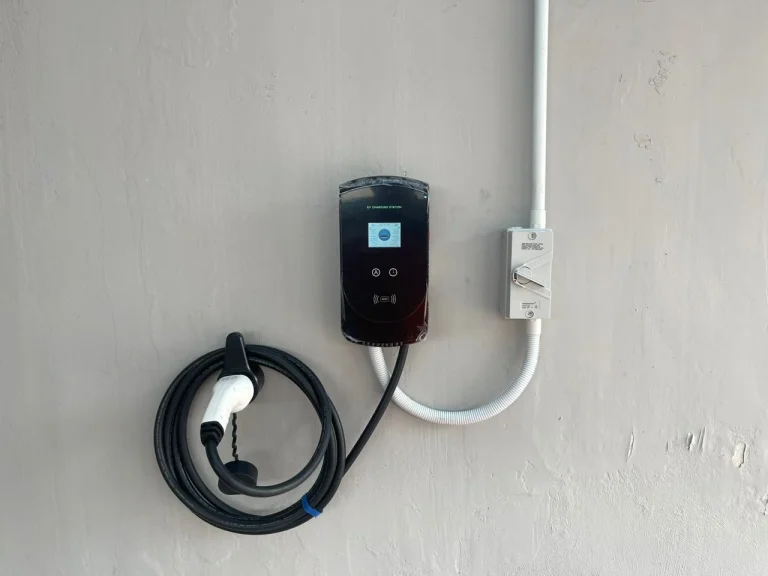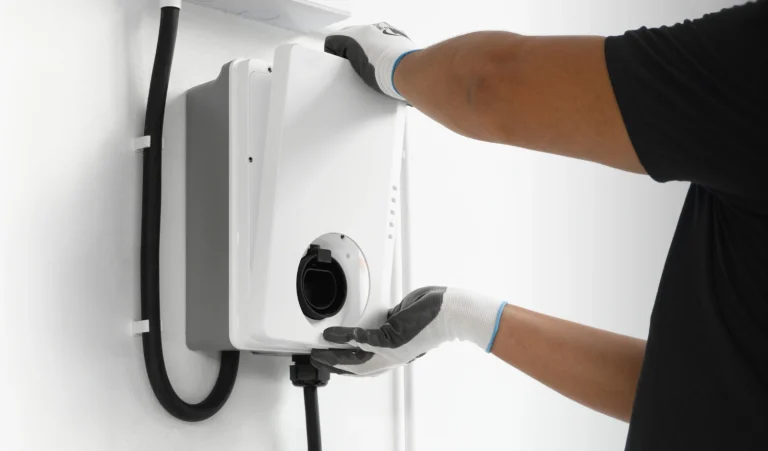
Hardwired vs NEMA 14-50 Plug EV Charger Installation Cost USA
Hardwired vs NEMA 14-50 Plug EV Charger Installation Cost USA: A Comprehensive Guide
Residential electric vehicle (EV) charging infrastructure across the United States primarily relies on Level 2 alternating current (AC) systems operating on 240-volt circuits. When installing a Level 2 Electric Vehicle Supply Equipment (EVSE) unit, homeowners must choose between two primary connection methods: a hardwired installation, where the charger is connected directly to the home’s electrical panel via dedicated wiring, or a cord-and-plug installation utilizing a NEMA 14-50 industrial receptacle. While both methods deliver Level 2 charging, they differ significantly in charging speed, National Electrical Code (NEC) requirements, physical failure points, and initial installation expenses.
Evaluating the Hardwired vs NEMA 14-50 plug EV charger installation cost USA market requires analyzing electrical hardware costs, circuit breaker requirements, electrician labor hours, and local building permit fees. Recent revisions to the NEC—specifically regarding Ground Fault Circuit Interrupter (GFCI) requirements for 240V garage receptacles—have altered the financial comparison between these two approaches. This educational guide details the technical specifications, component pricing, code requirements, practical applications, and safety considerations for both hardwired and plug-in EV charger installations in American homes.
Overview of Hardwired vs NEMA 14-50 Plug EV Charger Installation Cost USA

To understand the Hardwired vs NEMA 14-50 plug EV charger installation cost USA dynamic, it is necessary to examine how electrical codes dictate equipment and circuit sizing. Under NEC Article 625, EV charging is classified as a continuous electrical load, meaning the circuit breaker and supply wiring must be rated for 125% of the charger’s maximum continuous draw.
Continuous Load & Amperage Thresholds (NEC Article 625)
├── NEMA 14-50 Receptacle Setup (Plug-In)
│   ├── Circuit Breaker Sizing: 50 Amps (Maximum receptacle rating)
│   ├── 80% Continuous Load Limit: 40 Amps Max Draw (~9.6 kW at 240V)
│   └── Required Code Protection: GFCI Circuit Breaker (NEC 210.8 / 625.54)
└── Hardwired Dedicated Installation
    ├── Circuit Breaker Sizing: 60 Amps (Direct connection, no outlet)
    ├── 80% Continuous Load Limit: 48 Amps Max Draw (~11.5 kW at 240V)
    └── Required Code Protection: Internal EVSE GFCI (No GFCI breaker needed)
Nationwide, the average turnkey installation cost for both methods generally falls between $800 and $2,000 (excluding the purchase price of the EVSE unit itself) when installed near an existing main panel. However, the line-item material breakdown differs between the two options:
-
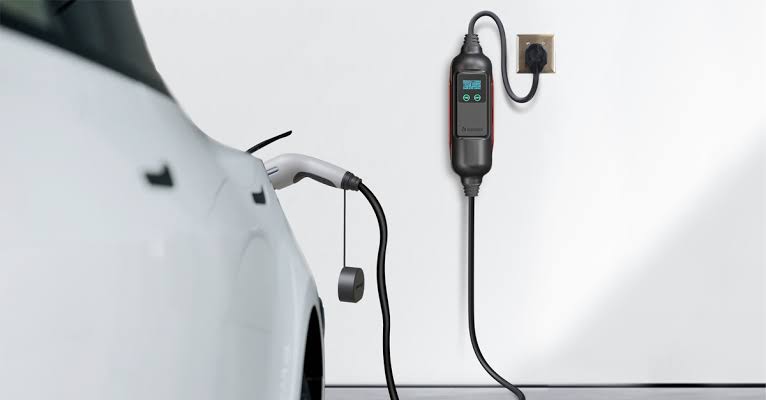
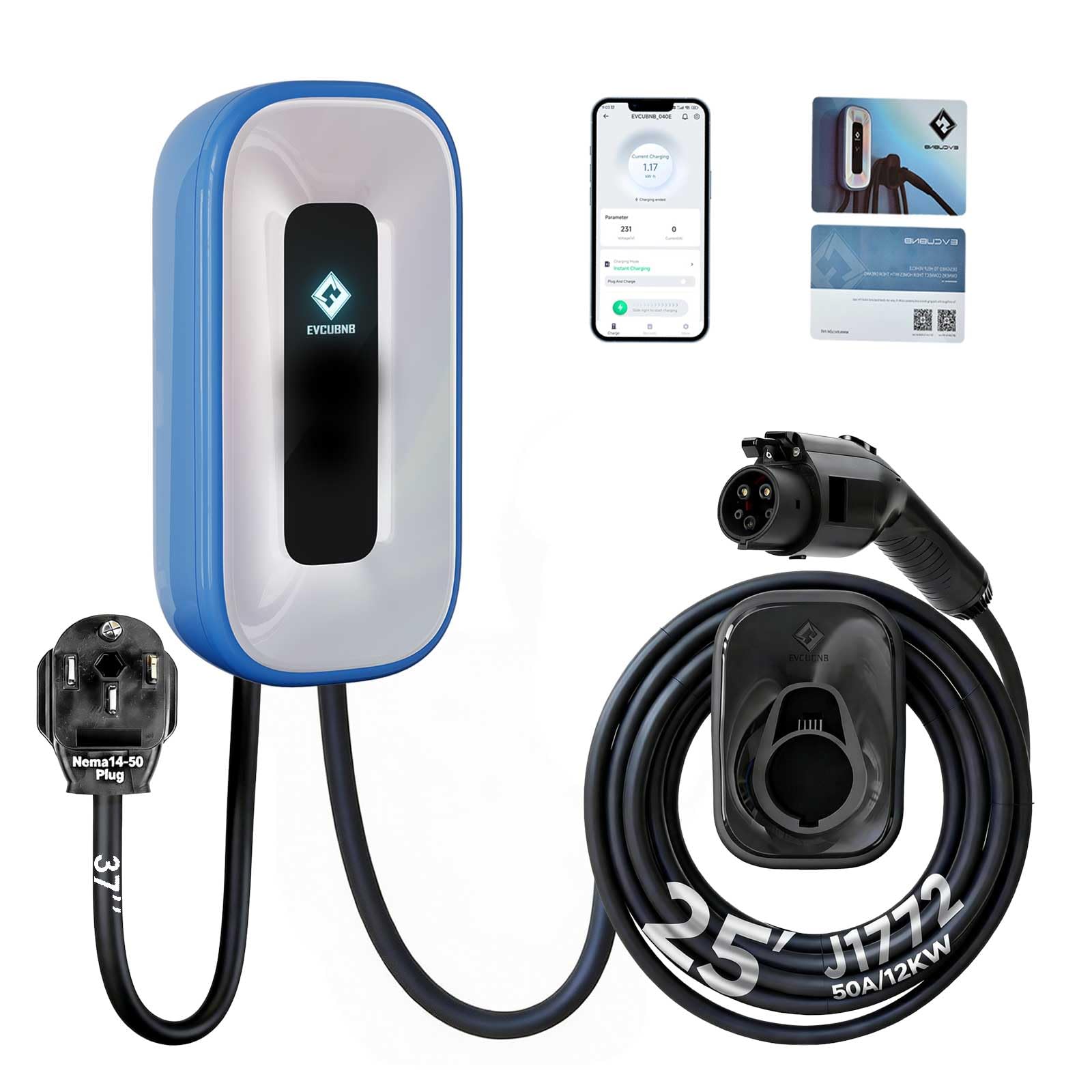
NEMA 14-50 Plug-In Installation: Requires a 50-amp circuit breaker, 6/3 AWG copper building wire (which includes a neutral wire required by NEMA 14-50 configurations), a 240V heavy-duty receptacle, a weatherproof junction box, and an NEC-mandated GFCI circuit breaker. In many jurisdictions adhering to NEC 2020, 2023, or 2026 standards, the required 50-amp double-pole GFCI breaker adds $120 to $220 in hardware costs compared to a standard breaker. Additionally, high-spec industrial-grade receptacles cost $50 to $100.
-
Hardwired Direct Installation: Requires a 50-amp or 60-amp circuit breaker, 6/2 AWG copper building wire (hardwired 240V chargers do not require a neutral wire, reducing conductor material costs), conduit, and a junction box or direct rear-entry wall connection. Because the EVSE unit contains built-in personnel protection circuitry compliant with UL standards, NEC rules generally do not require an external GFCI circuit breaker for hardwired connections. As a result, hardwiring frequently eliminates $150 to $300 in receptacle and GFCI breaker hardware expenses.
Key Installation Categories and Technical Variations
Choosing between hardwired and plug-in configurations involves matching vehicle battery capacity, daily driving habits, panel capacity, and local electrical codes against specific installation methods.
| Category / Type | Technical Description | Common Use Case | Time / Cost / Effort Level |
| Standard Hardwired (48A / 60A Circuit) | Direct wire connection to EVSE; 60A breaker, 6 AWG THHN or 4 AWG NM-B wire; no receptacle or GFCI breaker. | Homeowners seeking maximum residential Level 2 charging speed (~11.5 kW) and lower material complexity. | $500–$1,200 (Labor + Materials) / Standard labor / Moderate effort. |
| Industrial NEMA 14-50 (40A / 50A Circuit) | Heavy-duty outlet (Hubbell/Bryant) fed by 50A GFCI breaker and 6/3 AWG wire; plug-in EVSE connection. | Drivers who plan to move within 3–5 years or frequently travel with a portable charger. | $650–$1,400 (Labor + Materials) / Higher material cost (GFCI breaker + outlet). |
| Residential-Grade NEMA 14-50 (Retrofit) | Low-cost builder-grade outlet fed by 50A breaker; prone to thermal degradation under continuous 40A loads. | Legacy non-EV installations (e.g., range/dryer outlets) being temporarily adapted for light EV use. | $400–$800 (Labor + Materials) / High long-term thermal risk. |
| Hardwired Pedestal / Outdoor Mount | Free-standing exterior mounting post with underground conduit feeder and hardwired EVSE. | Open driveways, parking pads, or detached structures without interior mounting walls. | $1,200–$2,800 (Labor + Materials) / Includes trenching & post hardware. |
| Smart Load-Managed Hardwired | EVSE connected to panel current transformers (CTs) that dynamically throttle charging during household peak draw. | Homes with 100-amp main panels lacking capacity for a dedicated 50A/60A continuous load. | $900–$1,800 (Labor + Materials) / Advanced electrical setup. |
Choosing Between Installation Methods
Deciding between a hardwired connection and a NEMA 14-50 receptacle depends on long-term residency plans and charging performance demands. Hardwiring provides the highest continuous power (48 amps / 11.5 kW), eliminates electrical plug wear, avoids potential GFCI “nuisance tripping,” and often costs less in raw electrical materials due to omitting GFCI breakers and neutral wires. Conversely, a NEMA 14-50 outlet offers physical flexibility: the charging unit can be unplugged easily for servicing, replacement, or relocation without hiring an electrician.
Practical Scenarios and Field Applications
Scenario 1: Attached Garage Installation Near Main Panel (Hardwired 48A)
A single-family home in Texas features a 200-amp service panel located inside an attached two-car garage. The owner drives a long daily commute and seeks maximum overnight charging speed.
-
Implementation Steps & Components:
-
Performing an NEC Article 220 load calculation to confirm 60 amps of continuous capacity.
-
Installing a standard 60-amp double-pole non-GFCI breaker in the main panel.
-
Running 4 feet of 3/4-inch metal clad (MC) cable or EMT conduit containing 6 AWG THHN copper wire directly into the rear entry port of a wall-mounted smart EVSE.
-
Hardwiring conductors directly to the EVSE terminal blocks using a calibrated torque screwdriver.
-
Obtaining a municipal electrical permit and completing a final building inspection.
-
-
Why Relevant: Demonstrates a clean, low-cost hardwired installation. Omitting the NEMA 14-50 receptacle, neutral wire, and GFCI breaker keeps total electrical material and labor costs between $500 and $850.
Scenario 2: Detached Garage with Plug-In Mobility Needs (NEMA 14-50)
A homeowner in Illinois occupies a property with a detached garage 30 feet from the main panel and wants the flexibility to take the Level 2 charger to an RV park during summer trips.
-
Implementation Steps & Components:
-
Trenching 18 inches deep between the house and detached garage to lay Schedule 80 PVC conduit.
-
Pulling 6/3 AWG THHN copper conductors (two hot wires, one neutral wire, one ground wire) from the main panel.
-
Installing a 50-amp double-pole GFCI circuit breaker in the main panel to comply with NEC Section 625.54 outdoor/garage receptacle codes.
-
Mounting an industrial-grade NEMA 14-50 receptacle (e.g., Bryant or Hubbell) inside a heavy-duty gang box.
-
Plugging in a 40-amp portable Level 2 EVSE and securing the mounting bracket to the wall.
-
-
Why Relevant: Illustrates how outdoor trenching, neutral conductor requirements, industrial outlets, and GFCI breakers increase expenses. Total installation costs range from $1,400 to $2,400.
Scenario 3: Retrofitting an Older 100-Amp Home Panel (Hardwired 32A/40A)
An older home in Massachusetts operates on a fully populated 100-amp main service panel that cannot support a 50A or 60A breaker without an expensive service upgrade.
-
Implementation Steps & Components:
-
Evaluating the main panel busbar load, confirming 40 amps of available capacity.
-
Installing a 40-amp double-pole standard breaker in the panel.
-
Hardwiring the EVSE using 8 AWG copper conductors in flexible conduit.
-
Setting the internal physical DIP switches or digital firmware of the hardwired EVSE to cap output at 32 amps continuous (80% of 40A breaker).
-
-
Why Relevant: Demonstrates how hardwiring allows custom amperage configuration. The homeowner avoids a $2,500 to $4,500 service panel upgrade while still securing a reliable 32-amp (7.7 kW) Level 2 charge. Total installation cost averages $600 to $950.
Comparative Scenario Analysis
Scenario 1 highlights how hardwiring near the panel minimizes component costs while maximizing power output. Scenario 2 shows that choosing a NEMA 14-50 outlet for portability requires additional hardware investment (GFCI breaker, 4-wire cable, industrial outlet) and adds civil trenching expenses. Scenario 3 illustrates how hardwiring provides flexibility for panels with limited electrical capacity by allowing adjustable internal amperage settings without violating electrical code.
Planning, Capital Budgeting, and Resource Allocation
Evaluating the Hardwired vs NEMA 14-50 plug EV charger installation cost USA metrics requires itemizing line-item hardware, wire gauges, code compliance accessories, and electrician hourly rates. The budget model below details baseline comparative costs for both methods installed within 10 feet of a main panel.
| Budget Component | Hardwired Installation (48A / 60A Circuit) | NEMA 14-50 Plug Installation (40A / 50A Circuit) | Line-Item Explanation & Variance Factors |
| Circuit Breaker | $15 – $35 (Standard 60A Double-Pole) | $120 – $220 (50A Double-Pole GFCI) | NEC 210.8 / 625.54 mandates GFCI breakers for receptacles. |
| Building Wire / Cable | $30 – $60 (6/2 AWG Copper THHN) | $50 – $90 (6/3 AWG Copper THHN) | NEMA 14-50 requires a neutral wire; hardwired 240V does not. |
| Receptacle & Box | $0 (No receptacle required) | $60 – $120 (Industrial Hubbell/Bryant + box) | Avoid cheap $10 residential-grade outlets for EV continuous loads. |
| Conduit & Fittings | $25 – $50 (3/4″ EMT / LFMC + fittings) | $25 – $50 (3/4″ EMT / LFMC + fittings) | Protects building wire between panel and junction point. |
| Electrician Trade Labor | $350 – $750 (2–3 hours labor) | $350 – $750 (2–3 hours labor) | Hourly electrician rates range from $100 to $200/hour nationwide. |
| Permit & Inspection | $50 – $200 (Local AHJ permit) | $50 – $200 (Local AHJ permit) | Municipal electrical permit and building inspector sign-off. |
| Estimated Outlay | $470 – $1,095 (Labor + Materials) | $655 – $1,430 (Labor + Materials) | Hardwire installs average $150–$350 less in electrical materials. |
Note: Figures represent baseline estimates in US dollars across typical domestic installation environments. Material costs fluctuate based on copper market pricing, panel distance, and local authority having jurisdiction (AHJ) permitting fees.
Technical Strategies, Tools, and Support Options
Navigating Level 2 EVSE selection involves understanding circuit protection strategies, load monitoring devices, and financial incentive programs.
-
Industrial-Grade vs. Residential-Grade Receptacles: If choosing a NEMA 14-50 setup, installing an industrial-grade receptacle (e.g., Hubbell or Bryant) is critical. Industrial outlets utilize heavy copper alloy clamping jaws that withstand continuous thermal stress, whereas cheap $10 range outlets use thin spring clips that can loosen, overheat, and melt under continuous 40A loads.
-
Mitigating GFCI Nuisance Tripping: Electric vehicle charging stations contain built-in personnel protection circuitry that tests for ground faults. When a plug-in EVSE is connected to a circuit protected by a GFCI circuit breaker, the two monitoring systems can interfere with one another—a phenomenon known as “double-GFCI tripping”—causing unannounced charging shutdowns. Hardwiring eliminates the external GFCI breaker, resolving this conflict entirely.
-
Energy Management Systems (Smart Splitters / CTs): Devices like digital smart splitters or panel-level current transformers (CTs) allow homeowners to install Level 2 chargers without upgrading 100A main service panels. These tools monitor total home power draw and throttle EVSE output when major household appliances (like HVAC or water heaters) cycle on.
-
Section 30C Federal Tax Credit and Utility Incentives: The federal Alternative Fuel Vehicle Refueling Property Credit (Section 30C) provides a 30% tax credit (up to $1,000) for qualified residential EVSE installations in eligible census tracts. Additionally, many electric utilities offer rebates ($200 to $1,000) for installing smart hardwired chargers that support off-peak time-of-use (TOU) charging schedules.
Safety Hazards, Technical Risks, and Common Pitfalls
Operating continuous 240V high-current circuits presents thermal and electrical hazards if installation standards are compromised.
-
Melting Residential-Grade Outlets: Using standard builder-grade NEMA 14-50 outlets designed for intermittent range/dryer use rather than continuous EV charging is a leading cause of electrical fires. Continuous 40A current causes spring terminals to lose tension, increasing resistance and leading to melted enclosures. Prevention: Hardwire the station or specify an industrial-grade Hubbell/Bryant receptacle.
-
Exceeding the 80% Continuous Load Limit: Connecting a 48-amp charger to a NEMA 14-50 plug on a 50-amp circuit violates the NEC 80% rule. Drawing 48A on a 50A breaker causes thermal tripping and damages conductor insulation. Prevention: Cap plug-in chargers at 40 amps; reserve 48-amp charging exclusively for hardwired 60-amp circuits.
-
Improper Terminal Screw Torque: Failing to torque wire connections to manufacturer-specified inch-pounds allows conductors to shift during thermal expansion cycles. Loose terminal connections create high-resistance hot spots. Prevention: Require the installing electrician to use a calibrated torque screwdriver on all breaker, outlet, and EVSE terminals.
-
Omitting Required GFCI Breakers on Plug-In Circuits: Installing a NEMA 14-50 receptacle on a standard non-GFCI breaker to save money violates NEC 210.8(A) and NEC 625.54, failing municipal electrical inspections and posing shock hazards in damp garages. Prevention: Hardwire the station if you wish to avoid purchasing a expensive GFCI breaker legally.
-
Skipping Permits and Local Inspections: Performing unpermitted DIY electrical work can void home insurance coverage in the event of an electrical fire. Prevention: Pull municipal electrical permits and obtain an official building inspector sign-off.
Maintenance, Best Practices, and Long-Term Management
Level 2 EVSE units require minimal daily maintenance, but systematic inspections preserve safety and prevent unexpected downtime.
Preventative Maintenance Checklist
-
Monthly Cable and Plug Inspection: Inspect the charging cable for cuts, kinks, or insulation wear. Check the vehicle connector nozzle for debris, bent pins, or signs of thermal discoloration.
-
Biannual Thermal Touch Check: During an active 40A or 48A charging session, touch the circuit breaker panel cover and junction box/outlet enclosure. Components should feel warm, but never hot to the touch. Excessive heat indicates loose connection torques or outlet wear.
-
NEMA 14-50 Receptacle Tension Test (For Plug-In Setups): Every 12 to 18 months, check the physical resistance when inserting the plug. If the plug inserts loosely without firm resistance, the receptacle jaws have lost clamping tension and the outlet must be replaced to prevent arcing.
-
Annual Electrical Connection Audit: Have an electrician inspect terminal torques, verify ground continuity, and test the EVSE’s internal personnel protection system.
-
Firmware and Network Management: For smart Wi-Fi-connected chargers, ensure automatic over-the-air firmware updates are enabled to maintain cybersecurity and utility time-of-use programming.
Performance Documentation and System Verification
Maintaining organized records of your EVSE installation protects property value, simplifies warranty claims, and verifies compliance during home real estate transactions.
Essential Project Records
-
Municipal Electrical Permit & Final Inspection Certificate: Official sign-off from the local building department proving NEC compliance.
-
Itemized Electrician Invoice: Detailed invoice listing breaker amperage, wire gauge size (e.g., 6/2 AWG vs. 6/3 AWG), conduit specifications, and labor details.
-
Panel Load Calculation Sheet: Written NEC Article 220 load calculation proving the home’s main panel safely accommodates the additional continuous load.
-
Manufacturer Hardware Manual & UL Listing Documentation: Proof of Nationally Recognized Testing Laboratory (NRTL) safety listing.
Illustrative Performance Verification Examples
-
Example A (Utility Rebate Verification): A homeowner in California submits their itemized electrician invoice, municipal permit sign-off, and smart hardwired EVSE serial number to their local utility portal, securing a $500 installation rebate within two weeks.
-
Example B (Home Resale Conveyancing): During a residential property sale, the buyer’s home inspector verifies a hardwired 48-amp EV charger in the garage. The seller provides the official electrical permit, load calculation worksheet, and 60-amp breaker documentation, proving a fully code-compliant installation that enhances the property’s appraisal value.
Closing Summary
Evaluating the Hardwired vs NEMA 14-50 plug EV charger installation cost USA metrics demonstrates that hardwiring an EV charger is generally the more cost-effective, safer, and higher-performing option for long-term residential use. While NEMA 14-50 outlets offer plug-in portability, they require expensive GFCI circuit breakers, neutral wiring, and industrial-grade receptacles that increase material costs while capping continuous charging at 40 amps. Hardwiring eliminates GFCI nuisance tripping, delivers up to 48-amp charging speeds (~11.5 kW), and reduces material expenses by omitting outlets and neutral conductors. By consulting licensed electricians, calculating panel loads, and obtaining municipal permits, US homeowners can build a safe, future-proof Level 2 charging system tailored to their driving needs.
Frequently Asked Questions
Why is hardwiring an EV charger often cheaper to install than a NEMA 14-50 outlet?
Hardwiring eliminates the need for an expensive 50-amp GFCI circuit breaker ($120–$220) and an industrial-grade NEMA 14-50 receptacle ($50–$100). Additionally, hardwired 240V circuits do not require a neutral wire, allowing electricians to use 2-conductor cable (e.g., 6/2 AWG) instead of more expensive 3-conductor cable (6/3 AWG).
Does a NEMA 14-50 outlet for EV charging require a GFCI breaker under the NEC?
Yes. Under NEC 210.8(A) and NEC 625.54, all 125V through 250V receptacles installed in garages or outdoors specifically for EV charging must have GFCI circuit breaker protection. Hardwired EV chargers are exempt from this requirement because they incorporate internal personnel protection circuitry that satisfies UL standards.
Can a NEMA 14-50 plug-in charger deliver 48-amp charging speeds?
No. A NEMA 14-50 receptacle is rated for a maximum circuit size of 50 amps. Under the NEC 80% continuous load rule, a 50-amp circuit is capped at 40 amps of continuous output (~9.6 kW). To charge at 48 amps (~11.5 kW), the charger must be hardwired to a dedicated 60-amp circuit.