7kW Home EV Charger Installation Cost UK Guide
7kW Home EV Charger Installation Cost UK: A Comprehensive Guide
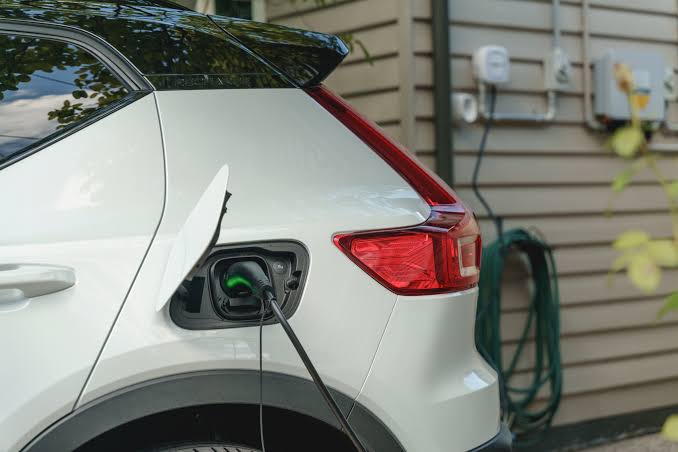
Electric vehicle (EV) adoption across the United Kingdom relies heavily on home charging infrastructure. A dedicated 7-kilowatt (7kW) single-phase home charging point represents the standard for domestic charging. Operating on a standard 230V alternating current (AC) domestic supply at approximately 32 amperes, a 7kW unit adds roughly 25 to 30 miles of range per hour to an electric car—filling a typical 60kWh battery from 20% to 100% in about 7 hours.
Evaluating the 7kW home EV charger installation cost UK market requires analyzing hardware specifications, consumer unit (fuse box) capacity, cable run distances, earthing arrangements, and government grant schemes. This guide provides a neutral breakdown of equipment types, regional installation costs, practical application scenarios, regulatory safety rules, and long-term operating management for UK property owners.
Overview of 7kW Home EV Charger Installation Cost UK
Understanding a 7kW home EV charger installation cost UK project involves evaluating both hardware procurement and electrician labor overhead. Across England, Scotland, and Wales, a standard turnkey 7kW smart charger installation typically ranges from £800 to £1,500 (including 20% VAT) for a standard, straightforward setup.
Average 7kW Home EV Charger Installation Cost Breakdown (UK Averages)
├── 7kW Smart Charger Hardware Unit: £450 – £800
├── Standard Electrician Labor & Fixing: £250 – £450
├── Electrical Cabling (10m Run) & Surge Protection: £100 – £250
├── Notification & EV Certification Fees: £50 – £100
└── Gross Fully Installed Cost Range: £850 – £1,500
The underlying technical drivers of installation pricing include:
-
Distance to Consumer Unit: Standard installations assume a cable run of up to 10 meters between the main fuse box and the wall-mounted charger. Longer cable runs or runs requiring subterranean trenching across gardens or driveways add £10 to £20 per meter, plus civil excavation fees.
-
Consumer Unit Spare Capacity: A 7kW charger draws a continuous 32-amp load. If an older consumer unit lacks spare breaker ways or lacks a modern Residual Current Device (RCD) or Surge Protection Device (SPD), replacing or upgrading the board adds £400 to £800 in trade fees.
-
Government Incentive Rules: Under the Office for Zero Emission Vehicles (OZEV) EV Chargepoint Grant, eligible flat owners, renters, residential landlords, and properties using approved cross-pavement channels receive a grant covering 75% of the installation cost up to £500 per socket. Owner-occupiers with standard private driveways pay the full installation price.
Primary Charger Categories and Equipment Variations
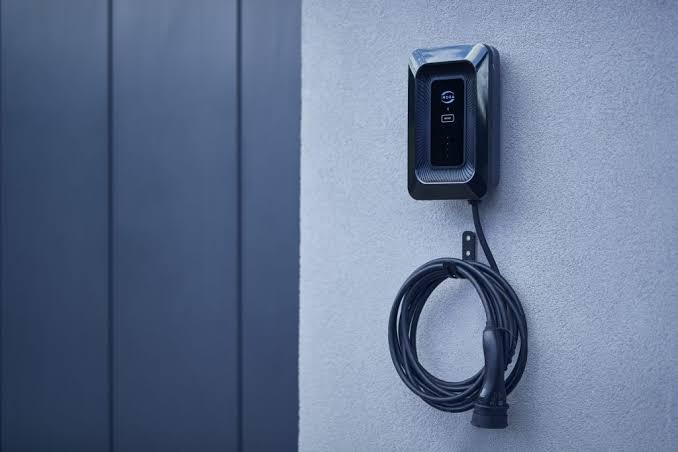
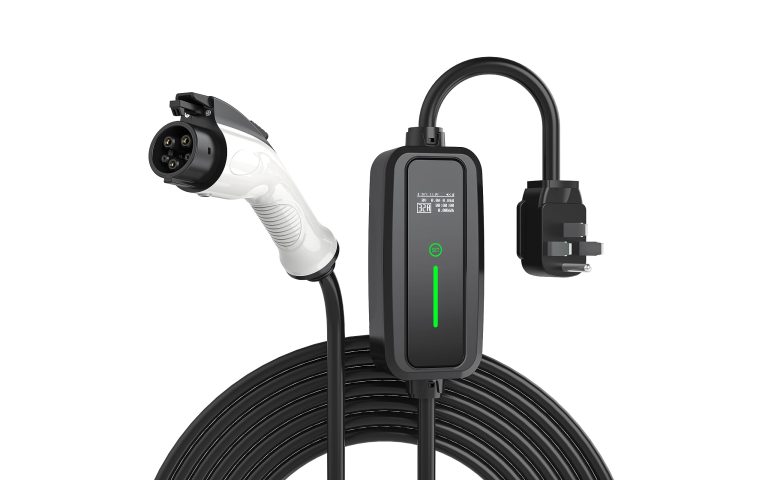
Selecting a 7kW home charger involves choosing between tethered and untethered models, smart software features, and aesthetic enclosure designs.
| Category / Type | Technical Description | Common Use Case | Estimated Cost Range (Installed) |
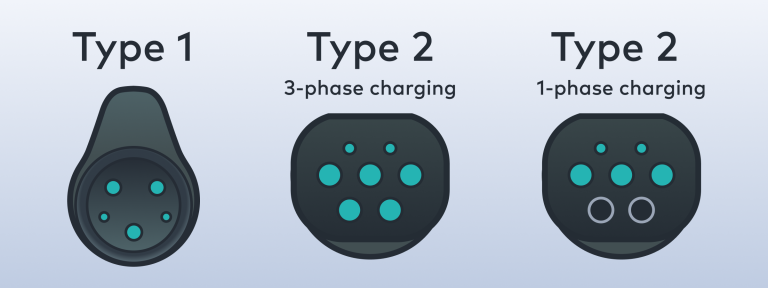
| Tethered 7kW Smart Charger | Includes a permanently attached 5m–7.5m Type 2 cable attached to the wall box. | Driveways where the driver wants quick “plug-and-charge” convenience without handling wet loose cables. | £850 – £1,400 / Low-to-moderate installation effort. |
| Untethered (Universal) 7kW Charger | Features an open Type 2 socket; requires driver to plug in a separate Type 2 cable. | Homes with multiple EVs with different connector styles, or drivers preferring a clean wall aesthetic. | £800 – £1,300 / Low-to-moderate installation effort. |
| Solar-Integrated 7kW Charger | Uses current transformers (CT clamps) to divert excess daytime solar array generation into the vehicle. | Homes with existing or planned rooftop solar PV systems seeking zero-emission charging. | £1,000 – £1,700 / Moderate-to-high installation effort. |
| Compact / Architectural Charger | Ultra-small wall boxes designed for tight spaces or architectural conservation properties. | Properties with limited wall space or strict visual aesthetic guidelines. | £950 – £1,500 / Standard installation effort. |
| Cross-Pavement Gullied System | Chargepoint paired with an approved floor-embedded pavement cable channel. | Terraced homes or flats without driveways, utilizing on-street parking directly outside. | £1,300 – £2,200 / High civil & highway authority effort. |
Choosing Between Options
Deciding among these models depends on household vehicle arrangements and property access. Tethered chargers provide daily convenience by keeping the cable attached to the wall, whereas untethered chargers offer visual tidiness and compatibility with different cable lengths. If a home features rooftop solar panels, selecting a solar-aware smart charger allows automatic switching between grid power and excess solar generation.
Practical Installation Scenarios and Field Applications
Scenario 1: Standard Suburban Driveway Installation (Short Cable Run)
A single-family detached property in the West Midlands features a modern 100A main service board located inside an integral garage, with a dedicated driveway directly outside.
-
Implementation Steps:
-
Installing a 32A Type B circuit breaker and Surge Protection Device (SPD) inside the main consumer unit.
-
Drilling a wall penetration and running 3 meters of 6mm² Steel Wire Armoured (SWA) cable to an exterior wall location.
-
Mounting a tethered 7kW smart charger at chest height.
-
Testing earth loop impedance and submitting a notification to the local Distribution Network Operator (DNO).
-
-
Cost Profile: Represents a standard baseline installation. Short cable runs, an upgraded consumer unit, and easy access keep total hardware and labor costs between £800 and £1,100.
Scenario 2: Detached Garage Installation (Long Cable Run & Trenching)
A property in Yorkshire has a parking spot inside a detached brick garage located 25 meters away from the house’s main consumer unit.
-
Implementation Steps:
-
Digging a 500mm-deep trench across a 15-meter lawn section between the house and garage.
-
Laying warning tape and heavy-duty 10mm² SWA cable to manage voltage drop over the 25-meter circuit distance.
-
Installing a secondary garage consumer unit with integrated RCD protection.
-
Hardwiring an untethered 7kW charger to the garage interior wall.
-
-
Cost Profile: Civil excavation and heavier gauge copper cable increase material and labor fees, resulting in a total turnkey outlay of £1,400 to £2,200.
Scenario 3: Leasehold Flat with Allocated Parking Space (OZEV Grant Applied)
A tenant or leaseholder in a residential flat block in Greater London installs a 7kW charger at their assigned basement or court parking space.
-
Implementation Steps:
-
Securing written landlord/freeholder consent and property management permissions.
-
Running SWA cable from the flat’s individual utility meter box through communal cable risers.
-
Installing an OZEV-approved 7kW smart charger with mobile app authentication to prevent unauthorized public use.
-
Electrician processes the £500 OZEV EV Chargepoint Grant on behalf of the resident.
-
-
Cost Profile: While communal cable routing costs £1,200 gross, applying the £500 OZEV grant reduces the resident’s net out-of-pocket expense to £700.
Comparative Scenario Analysis
Scenario 1 highlights the low-cost simplicity of an attached garage layout. Scenario 2 shows how ground excavation and long SWA cable runs increase labor and material costs. Scenario 3 illustrates how government grant schemes help offset the administrative and logistical costs associated with shared leasehold buildings.
Planning, Capital Budgeting, and Resource Allocation
Estimating a 7kW home EV charger installation cost UK budget requires breaking down hardware expenses, electrical trade fees, and potential utility board upgrades. The table below outlines typical costs for a standard suburban home.
| Cost Component | Typical Cost Range (GBP £) | Line-Item Explanation & Variance Factors | Optimization Tips |
| 7kW Smart Charger Unit | £450 – £800 | Smart wall box (Tethered or Untethered); smart app controls. | Select models featuring built-in PEN fault protection to avoid earthing rods. |
| Electrician Trade Labor | £250 – £450 | 3 to 5 hours of work by an EV-certified electrician. | Bundle installation during wider home electrical work if possible. |
| Cabling & Fixing Hardware | £100 – £250 | 6mm²/10mm² SWA cable, clips, glands, and outdoor isolators. | Position the charger on the wall closest to your car’s charge port. |
| Optional Consumer Unit Upgrade | £400 – £800 | Upgrading old fuse boards lacking RCD/SPD capacity. | Have an electrician check your main board before ordering hardware. |
| Optional Trenching & Civil Works | £200 – £600 | Ground excavation for long garden or driveway cable runs. | Soft-ground digging (lawns) is significantly cheaper than lifting block paving. |
| OZEV Grant Discount (If Eligible) | -£500 | Available for renters, flat owners, and cross-pavement installs. | Use an OZEV-approved installer who handles the application directly. |
| Net Out-of-Pocket Cost Range | £800 – £1,500 (Standard) | Turnkey installed outlay (or £350–£1,000 if grant-eligible). | Obtain 3 detailed itemized quotes from certified installers. |
Note: Figures listed represent general UK market estimates in GBP (£) including 20% VAT. Final project expenses vary depending on London/South-East regional labor markups, cable distance, and fuse box specifications.
Technical Strategies, Regulations, and Support Frameworks
Deploying a domestic 7kW charger in the UK requires adhering to specific electrical regulations, smart charging laws, and grid notification standards.
UK Residential EV Charger Regulatory Hierarchy
├── BS 7671 Wiring Regulations (Requirements for Electrical Installations - 18th Edition)
├── Electric Vehicles (Smart Charge Points) Regulations (Mandatory Smart App & Scheduling)
├── Open Protective Earth Neutral (PEN) Fault Protection (BS 7671 Regulation 722.411.4.1)
└── DNO Notification (ENA Connect Direct or G67 Process within 28 Days)
-
Electric Vehicles (Smart Charge Points) Regulations: Mandatory UK legislation requiring all domestic EV chargers sold and installed to feature smart functionality, measuring data logs, off-peak scheduling, and randomized delay settings to prevent sudden grid spikes.
-
Open PEN Fault Detection Devices (O-PEN): Under BS 7671 Section 722, 230V single-phase chargers installed outdoors require protection against a broken supply neutral wire (open PEN fault). Modern chargers incorporate built-in electronic PEN fault detection, eliminating the need to drive an earthing rod into the ground outside.
-
Distribution Network Operator (DNO) Notification: Installers must notify the regional DNO (e.g., UK Power Networks, National Grid Electricity Distribution, SP Energy Networks) of the new 32A load within 28 days of installation. If the home has a main fuse under 60A, the installer must apply for a main fuse upgrade before connecting the charger.
-
EV Off-Peak Smart Tariffs: Connecting a 7kW smart charger unlocks dedicated home energy tariffs featuring overnight rates of 7p to 10p per kWh (compared to standard ~25p–28p rates). This reduces driving costs to roughly 2p to 3p per mile, saving £300 to £500 annually over standard tariffs.
Safety Hazards, Technical Risks, and Common Pitfalls
Installing high-current continuous AC equipment requires strict adherence to safety standards.
-
Attempting Uncertified DIY Installation: Installing a 32A continuous circuit without proper training violates BS 7671 electrical safety regulations, voids home insurance, and risks electrical fires. Mitigation: Always hire an electrician certified by a competent person scheme (such as NICEIC, NAPIT, or ELECSA).
-
Charging from a Standard 3-Pin Plug Continuously: Relying on a 13A “granny charger” plugged into a standard 3-pin wall socket for daily charging causes prolonged thermal stress on domestic ring mains. Mitigation: Install a dedicated 7kW wall box with SWA cable and dedicated breaker protection.
-
Overloading a 60A Main House Fuse: Installing a 32A charger in a home with a 60A main fuse—where an electric shower (40A) and oven (30A) operate concurrently—can blow the main service fuse. Mitigation: Have the installer perform a load calculation and fit a CT clamp with dynamic load-curtailment features.
-
Omitting Surge Protection Devices (SPDs): Skipping surge protection leaves the charger’s delicate circuit boards vulnerable to transient voltage spikes from lightning or grid switching. Mitigation: Ensure an SPD is installed inside the consumer unit or charge point.
-
Running Loose Cables Across Public Pavements: Dragging an EV cable across a public footway creates a trip hazard for pedestrians and risks local authority enforcement action. Mitigation: Utilize approved cross-pavement cable channels (gullies) installed with local council consent.
Maintenance, Best Practices, and Long-Term Management
While solid-state 7kW wall boxes require minimal day-to-day upkeep, simple checks help maintain long-term reliability.
Preventative Maintenance Checklist
-
Monthly Visual Inspections: Inspect the wall box casing for cracks, water ingress, or loose mounting screws. Check tethered cables along their length for flattening or outer sleeve damage.
-
Biannual Connector Cleaning: Ensure the Type 2 plug contacts remain free of dirt, leaves, or moisture buildup.
-
RCD / Circuit Breaker Testing: Press the “Test” button on the dedicated consumer unit RCD every 6 months to confirm the mechanical trip functions correctly.
-
App Firmware Updates: Keep the smart charger’s mobile app updated to preserve smart tariff integration, security patches, and scheduling features.
-
Five-Year Electrical Inspection: Have an electrician inspect the installation during periodic Electrical Installation Condition Reports (EICR).
Performance Documentation and Compliance Verification
Maintaining organized project documentation protects home value, simplifies warranty claims, and verifies safety compliance.
Essential Project Records
-
Electrical Installation Certificate (EIC): Mandatory formal sign-off issued by a qualified electrician confirming compliance with BS 7671.
-
Building Regulations Compliance Certificate: Confirmation issued via a competent person scheme (such as NICEIC or NAPIT) verifying Part P building control compliance.
-
DNO Notification Confirmation Letter: Proof that the local network distributor was notified of the 32A load.
-
OZEV Grant Approval Receipt: Official confirmation of the £500 grant claim if installed under flat/renter/landlord schemes.
Illustrative Documentation Examples
-
Example A (Off-Peak Energy Tariff Integration): A homeowner in Manchester installs a 7kW smart charger. By presenting the installer’s EIC certificate and registering the charger’s ID in an energy app, the owner unlocks a 7p/kWh overnight rate, cutting monthly charging costs from £45 to £12.
-
Example B (Property Resale Conveyancing): During a home sale in Surrey, the buyer’s solicitor requests proof of compliant electrical additions. The seller provides the EIC certificate, Part P building control sign-off, and DNO notification letter, avoiding delays during settlement.
Closing Summary
Evaluating the 7kW home EV charger installation cost UK landscape reveals that standard installations average between £800 and £1,500 fully fitted. While owner-occupiers with private driveways cover the full installation cost, eligible renters, flat owners, and landlords can access £500 OZEV grants to offset out-of-pocket expenses. By hiring certified electricians, verifying consumer unit spare capacity, selecting smart-tariff-compatible hardware, and keeping proper safety documentation, UK homeowners can establish a safe, cost-effective home charging system that delivers low per-mile driving costs for years.
Frequently Asked Questions
How much does it cost to install a 7kW EV charger at home in the UK?
In the UK, a standard 7kW smart home EV charger installation typically costs between £800 and £1,500 fully fitted (including VAT, hardware, labor, and basic cabling). Eligible renters, flat owners, and landlords can claim a £500 OZEV grant, reducing net costs to £350–£1,000.
Do I qualify for a UK government grant to install a home EV charger?
Under the OZEV EV Chargepoint Grant scheme, you qualify for up to £500 off installation costs if you live in a flat, rent your home, are a residential landlord, or lack a driveway and install an approved cross-pavement channel. Homeowners with standard private driveways do not qualify for the grant.
How long does a 7kW home charger take to charge an electric car?
A 7kW home charger delivers approximately 25 to 30 miles of driving range per hour. It typically charges an average 60kWh electric vehicle battery from 20% to 100% in roughly 7 hours, making it suitable for overnight charging.